

TL;DR:
- Camp testimonials offer authentic, experience-based insights that help parents gauge camp quality beyond marketing materials.
- They should focus on specific outcomes, challenges, and staff support, especially from families with similar children.
- Trustworthy testimonials, combined with direct conversations and visits, enhance confidence in camp choices and prevent mismatches.
Camp testimonials are firsthand accounts from past campers and their families that reveal what a summer program actually delivers beyond its brochure. The role of testimonials in camp selection is to give parents authentic, experience-based evidence that no marketing material can replicate. 71% of campers rely on review sites when making booking decisions, which means peer feedback now shapes camp enrollment more than any advertisement. Platforms like Campendium and directories on sites like Summer Camp Planner have made this feedback more accessible than ever, but knowing how to read it critically is what separates a confident choice from a costly mistake.
How can parents identify valuable camp testimonials versus generic ones?
Not all testimonials carry equal weight. The most useful ones describe specific outcomes: a child who arrived shy and left leading a team, or a camper who struggled with homesickness and received consistent staff support. Generic praise like “my daughter had the best summer ever” tells you nothing about whether the camp fits your child.

Testimonials focusing on child growth and how the camp handled real challenges offer far better insight than star ratings or vague enthusiasm. This matters because camps vary enormously in how staff respond to conflict, medical needs, or a child who is not thriving socially. A testimonial that mentions those moments specifically is worth ten that simply call the camp “amazing.”
Watch for these red flags when reading reviews:
- Overly uniform language. When multiple reviews sound nearly identical in phrasing, it suggests they may have been coached or curated rather than written independently.
- No mention of challenges. Authentic testimonials almost always include at least one difficulty the child faced and how the camp responded.
- Missing specifics about staff. Reviews detailing staff support and communication reveal camp culture far more accurately than isolated positive comments.
- Reluctance to provide references. High-quality camps provide two parent references from the previous summer without hesitation. A defensive response to this request is a significant warning sign.
Pro Tip: Filter testimonials by families whose children share your child’s personality type or support needs. A glowing review from a highly social, independent teenager tells you little if your child is introverted or has specific learning needs. Seeking reviews from similar families dramatically improves how useful those testimonials actually are.
One practical move most parents skip: ask the camp directly for two references from last summer’s families. Camps that are proud of their program hand these over without hesitation. Those that deflect or delay are telling you something important without saying a word.
What role do testimonials play alongside other camp selection criteria?
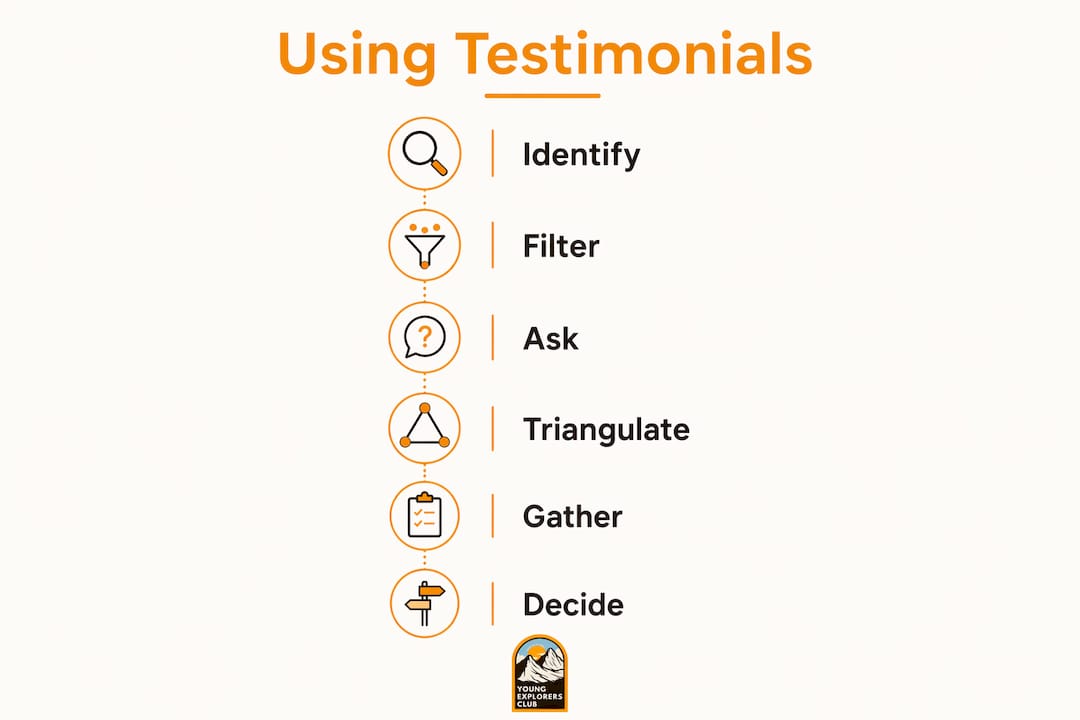
Testimonials are one input in a multi-step decision process, not the final word. Many parents discover a camp mismatch within the first two weeks of their child’s attendance, even after feeling confident during research. That gap exists because testimonials describe past experiences, not guarantees about your child’s specific situation.
The best camp choice aligns with your child’s personality and comfort level, and testimonials help reveal that alignment more than a feature list does. A camp with a climbing wall and a lake means nothing if the culture is competitive and your child needs a nurturing environment. Testimonials that describe the emotional tone of daily life at camp are the ones worth prioritizing.
Use this framework to place testimonials correctly within your broader research:
- Start with testimonials to build a shortlist. Read reviews across multiple sources to identify camps that consistently receive feedback matching your child’s needs.
- Check policies and daily schedules directly with staff. Ask about staff-to-camper ratios, how homesickness is handled, and what a typical day looks like. Testimonials hint at these things; direct conversations confirm them.
- Verify staff credentials and safety protocols. Ask about coaching credentials, safety protocols, and parent communication methods to complete the picture that testimonials begin to paint.
- Request a virtual tour or in-person visit. Seeing the physical environment and meeting staff in person adds a layer of verification that no review can provide.
- Prepare a backup option. Even thorough research can result in a poor fit. Having a second camp identified reduces pressure and gives you a clear path forward if the first choice does not work out.
Understanding how storytelling shapes camp culture can also help you interpret what testimonials are really communicating about a program’s values and daily atmosphere.
How do testimonials influence trust and social proof in camp decisions?
Social proof is the psychological principle that people look to others’ behavior and experiences to guide their own decisions. In camp selection, this means a parent reading ten detailed, positive testimonials from families similar to their own will feel significantly more confident than one reading a polished brochure. That confidence is not irrational. It is grounded in the real experiences of real families.
Testimonials build brand trust, optimize conversions, and use herd mentality to convince new customers of quality and effectiveness. For camps, this translates directly: a program with a strong testimonial record attracts more enrollments because parents trust the collective judgment of other families. This is why camps that actively collect and publish detailed parent feedback consistently outperform those that rely on polished marketing alone.
“While brochures offer polished impressions, detailed testimonials combined with candid camp communications provide a more trustworthy and complete picture for parents.” — Summer Camp Planner, 2026
The distinction between authentic testimonials and celebrity endorsements or paid promotions matters here. A testimonial from a real parent describing their child’s growth in specific terms carries far more weight than a generic endorsement from a well-known figure. Parents instinctively recognize this difference, which is why peer reviews from families with no commercial relationship to the camp are the most persuasive form of social proof available. When you see a pattern across multiple independent sources, that pattern is data worth trusting.
What practical steps can parents take to use testimonials effectively?
Using testimonials well requires a structured approach rather than casual browsing. The parents who make the best camp decisions treat testimonial research the way a journalist treats source verification: they look for corroboration, seek out primary sources, and ask follow-up questions.
Here is how to build that process:
- Start with directories that include real prices and filters. Platforms that let you sort by age range, activity type, and location give you a relevant pool of camps before you read a single review. This prevents testimonial bias toward well-marketed but poorly fitting programs.
- Use Reddit and Facebook parent forums. These spaces produce unfiltered, candid feedback that camp websites cannot curate. Search the camp name alongside terms like “experience” or “honest review” to surface threads where parents speak freely.
- Ask targeted questions when reading. Look specifically for mentions of how the camp handled a child who struggled, how staff communicated with parents during the session, and whether the camp delivered on its specific promises.
- Speak directly with past families. Direct conversations with other parents reveal specifics about communication quality and challenge handling that written testimonials alone cannot capture.
- Cross-reference testimonials with camp conversations. If multiple reviews mention exceptional staff responsiveness, ask the camp director to describe their communication protocol. Consistency between what parents say and what staff describe is a strong trust signal.
Pro Tip: After your child attends camp, use structured post-camp questions to gather your own firsthand feedback. This turns your family into a credible testimonial source for other parents and helps you evaluate whether the camp’s reputation matched reality.
Using forums, real price directories, and direct parent references to triangulate testimonial insights gives you a far more accurate picture than any single source. The goal is not to find perfect reviews. It is to find consistent, specific, honest ones that help you assess fit with confidence.
Key takeaways
Testimonials are the most reliable form of social proof in camp selection when they are specific, outcome-focused, and sourced from families with similar children.
| Point | Details |
|---|---|
| Specificity signals credibility | Testimonials describing concrete outcomes like confidence growth or challenge handling are far more useful than generic praise. |
| References are the gold standard | Requesting two direct parent references from the previous summer reveals camp transparency and quality instantly. |
| Filter by child similarity | Reviews from families with children of similar ages, personalities, or needs provide the most accurate fit assessment. |
| Testimonials need corroboration | Combine review research with direct staff conversations, policy checks, and virtual tours to validate what testimonials suggest. |
| Social proof drives enrollment | Camps with detailed, authentic testimonial records consistently build stronger parent trust than those relying on brochures alone. |
Why I think most parents underuse the most powerful testimonial available
Most parents I have spoken with spend hours reading star ratings and short blurbs on camp websites, then make a decision based on a gut feeling reinforced by polished photography. That is not a bad instinct, but it leaves the most valuable evidence untouched.
The single most powerful testimonial is a live phone call with a parent whose child attended last summer. It takes ten minutes and tells you more than fifty written reviews. You can ask about the moment things went wrong and how the camp responded. You can ask whether the director followed through on what they promised during enrollment. You can hear hesitation in someone’s voice when they answer a question, which no written review can convey.
I have also seen parents dismiss a camp based on one or two negative reviews without checking whether those reviews described an isolated incident or a systemic problem. Pattern recognition matters more than individual data points. Three reviews mentioning poor communication from staff is a pattern. One review from a parent who was unhappy about a schedule change is noise.
The camps worth trusting are the ones that hand you references without being asked, publish testimonials that include honest moments alongside the highlights, and whose staff answers your questions with specifics rather than reassurances. Testimonials are a starting point for trust, not a substitute for building it directly.
— Guillem
See what real families say about Youngexplorersclub
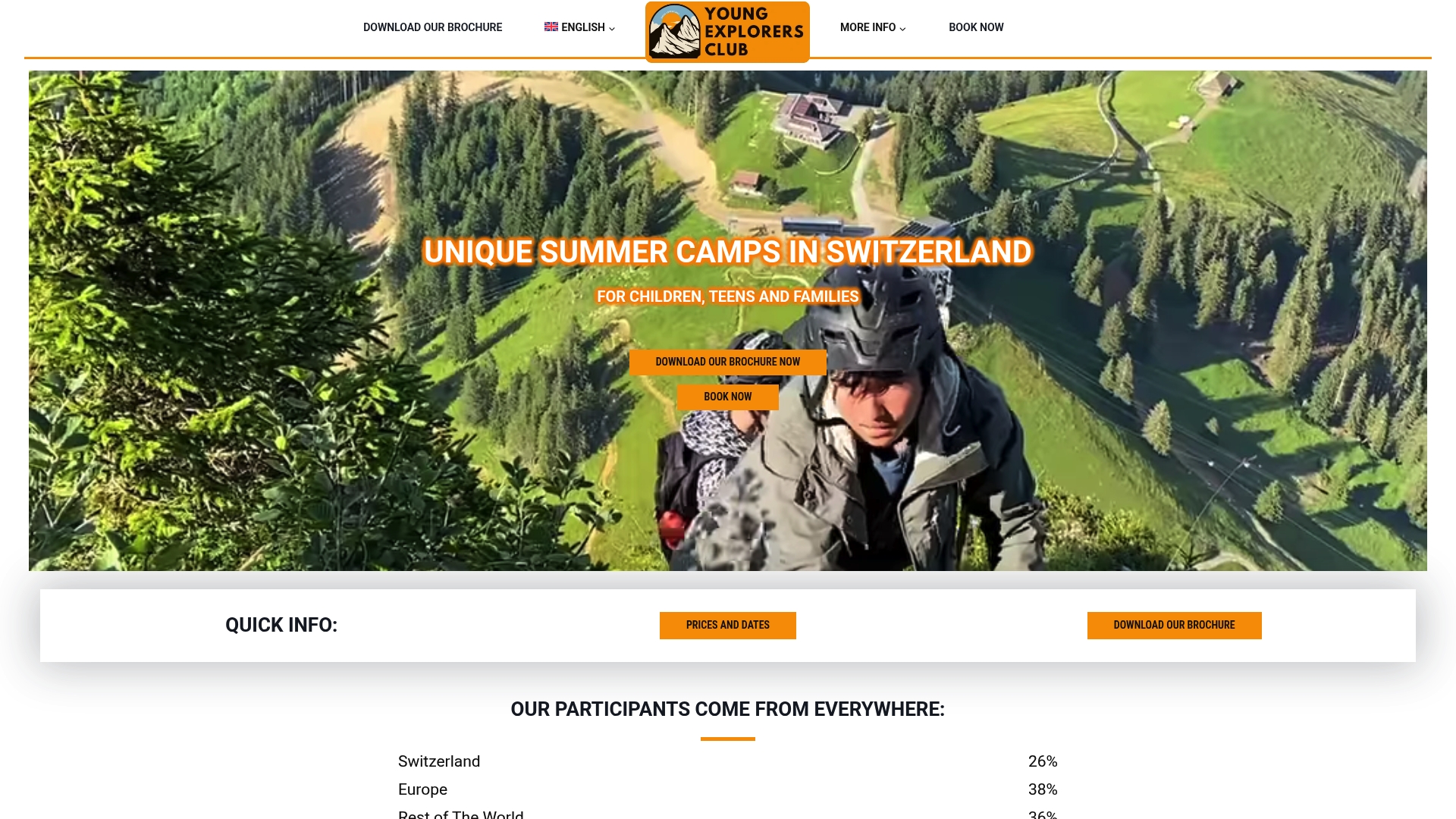
Youngexplorersclub publishes genuine parent testimonials from families across Europe and beyond who have sent their children to international summer camps in Switzerland. These are not curated highlights. They are honest accounts of what campers experienced during mountain biking, climbing, survival skills, and multisport programs in the Swiss Alps. If you are comparing options and want to see what specific growth looks like in a real program, explore the full camp listings at Youngexplorersclub and read what families describe in their own words. Transparency is built into how the program operates, and the testimonials reflect that directly.


