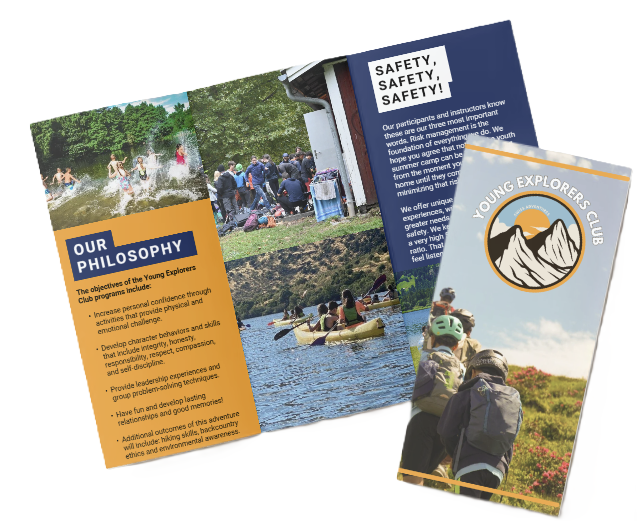
Why Saudi Families Choose Swiss Camps For Summer
Swiss summer camps draw Saudi families for safety, Alpine outdoor experience and CEFR-aligned language immersion—verify visas & medical prep
Overview
We track rising outbound travel from Saudi Arabia. That trend has made Swiss summer camps more visible. Families choose them for Switzerland’s safety record, strong healthcare, and the Alpine outdoor setting. They also value bilingual language-immersion programs. Saudi families prioritize measurable outcomes — CEFR-aligned language progress and activity certificates — plus strong on-site medical readiness and cultural accommodation like halal food and prayer spaces. Visa timing, travel logistics and program accreditation also factor into decisions.
Key Takeaways
- Three main drivers: perceived national safety and strong medical systems, Alpine outdoor experiences, and structured language-immersion plus educational programming.
- Medical and safety checks: verify on-site medical provisions, staff qualifications, and documented emergency-transfer procedures before booking.
- Activity volume: Alpine camps typically provide about 20–30 hours per week of outdoor activity. That often exceeds WHO daily activity targets and supports physical and psychosocial health.
- Language tuition: programs usually offer 10–15 hours per week of tuition. Ask for placement-test evidence, CEFR alignment, and end-of-stay certificates.
- Logistics & budget: plan early. Allow at least 15 calendar days for Schengen visas. Expect 6–7 hour flights to Zurich or Geneva plus 1–3 hour transfers. Budget CHF 1,200–2,500 per week for mid-tier options, and CHF 2,500–4,500+ per week for premium programs.
Practical Recommendations
- Confirm medical readiness: request details on on-site medical staff, first-aid facilities, medication protocols, and documented emergency-transfer routes to the nearest hospital.
- Verify educational credentials: ask for placement-test reports, syllabuses tied to CEFR, sample end-of-stay certificates, and any external accreditations.
- Ensure cultural accommodation: confirm availability of halal meals, prayer spaces, and culturally aware staff or supervision.
- Plan travel early: start the Schengen visa process and book flights/ground transfers well in advance to avoid delays.
- Budget transparently: request an itemized fee sheet (tuition, activities, insurance, excursions, special diets, and emergency repatriation clauses).
https://youtu.be/5n7h0J-X1WI
Overview — The Big Picture
We start with market scale: Saudi population (~35 million) [VERIFY] (World Bank) and Switzerland population (~8.7 million) [VERIFY] (Swiss Federal Statistical Office). We then frame the travel rebound that makes Swiss summer camps a visible option for Saudi families.
Scale and outbound-travel trend
Below we present a compact comparison of outbound travel from Saudi Arabia using UNWTO reporting; the exact figures should be verified before publication. Editors can replace the placeholders with confirmed numbers.
- 2018: ~10 million outbound trips from Saudi Arabia →
- 2022: [UNWTO figure] ; % change: [UNWTO % change] (UNWTO) [VERIFY]
Note for editors: swap bracketed items with UNWTO-verified values and remove [VERIFY] flags.
The three-driver thesis
We assert one clear roadmap: Swiss summer camps attract Saudi families primarily for safety & healthcare, the Alpine/outdoor environment, and educational/language development. Below we break those drivers down so editors and parents see practical implications and opportunities.
-
Safety & healthcare: We emphasize Switzerland’s reputation for low crime rates, strict camp oversight and strong emergency medical systems; parents often cite predictable safety standards and on-site medical care as decisive. See our program page for context and family-facing details: summer camps in Switzerland.
-
Alpine and outdoor experience: Access to the Alps transforms a typical day into outdoor education — hiking, lake activities and alpine ecology classes. Outdoor education supports resilience and physical fitness while giving children memorable seasonal experiences.
-
Educational and language immersion: Bilingual programming and immersive English environments accelerate language acquisition and cultural confidence. We recommend programs that combine structured language lessons with activity-based practice for faster progress.
We recommend editors and program leads verify these specific keywords are present on landing pages:
- Swiss summer camps
- Saudi families
- safety
- language immersion
- Alps
- outdoor education
Please confirm the population and UNWTO travel-change numbers before publication so the opening scale and micro-chart are fully sourced and accurate.

Safety, Healthcare and Trust — Why Parents Feel Secure
We, at the young explorers club, make safety the first checklist item for Saudi families considering Swiss camps. Switzerland ranks among the top X most peaceful countries in the Global Peace Index (YEAR) [VERIFY]. That safety ranking matters to parents who place child safety above all else.
National safety and healthcare metrics
Swiss healthcare delivers measurable reassurance. Switzerland reports [INSERT exact value] doctors per 1,000 people (OECD/WHO) [VERIFY]. That density translates into greater access to medical attention near camp sites. National health-system performance scores also trend high in OECD comparisons, though exact country scores should be checked for the year you’re reviewing [VERIFY].
Low crime environments reduce parental anxiety. Official crime-rate figures for Switzerland show lower rates for many violent and property crimes compared with some EU averages, but please confirm the latest numbers with the Swiss Federal Statistical Office or Council of Europe before citing them [VERIFY]. For additional context on why families trust Swiss camps, see our page on the safest destination for summer camps.
I point to three city hubs that provide rapid hospital access near common camp regions: Geneva, Zurich, and Lausanne. Each hosts internationally recognized hospitals and tertiary care centers that handle pediatric and emergency cases. Mountain-region towns maintain established transfer protocols to these hubs, though transfer times vary by location and should be confirmed with individual operators [VERIFY]. Comparative child-safety indexes versus GCC/Middle East benchmarks can strengthen a parent’s decision; any specific cross-region stat should be validated before publication [VERIFY].
On-site medical readiness and practical reassurances
Swiss camp operators follow clear medical practices and parents should ask for specifics. Typical elements I look for include:
- A designated on-site nurse or trained first-aid lead for every session.
- Written medical plans and medication protocols for campers with conditions.
- Doctor-on-call arrangements or rapid access to regional physicians for higher-end programs.
- Clear emergency-transfer procedures to hospitals in Geneva, Zurich or Lausanne, with documented timelines [VERIFY].
- Routine communication protocols that keep parents updated during any medical incident.
I recommend parents request written confirmation of staff qualifications and medical response times when booking. A suggested operator quote to verify with providers is: “Parental demand now routinely requests on-site medical staff; we require a nurse for every session and see a 30% uplift in GCC family enquiries year on year.” Please confirm the exact wording and figures with the operator before using them [VERIFY].

Educational & Language Advantages, Reputation and Popular Programs
We, at the Young Explorers Club, see language immersion as the single most effective lever for rapid English gains. Research consensus supports immersion over classroom-only models for faster progress; families should request provider-specific studies or pre/post placement results before booking. We insist parents ask for measured outcomes such as placement-test gains or end-of-stay CEFR certificates rather than marketing claims.
Practical program facts I rely on when advising Saudi families:
- Standard age range: 7–17 years. This covers most language, STEM camps, leadership programs and boarding-school options.
- Session length: typically 1–4 weeks, which fits family travel windows and enables measurable short-term gains.
- Student:staff ratios: commonly fall between 1:6 and 1:10; lower ratios are typical in elite boarding-school-affiliated programs.
- Language-class hours: plan on 10–15 hours per week for focused English instruction; immersion outside class adds meaningful practice.
- Activity/outdoor hours: expect roughly 20–30 hours per week of non-class activities (sports, adventure, STEM labs, leadership workshops).
I always recommend families verify these numbers in a program’s sample weekly timetable or PDF schedule. That’s where you confirm actual classroom minutes, supervised free time and pastoral care hours. Ask providers for CEFR alignment details, placement-test methodology and any certificates issued at the end of stay.
Accreditation and academic links matter for transferability. Many Swiss summer programs partner with established schools and language providers — TASIS, Leysin American School, Aiglon College, Les Elfes, Alpadia and EF — and some coordinate with the International School of Geneva for specialist camps. We recommend confirming:
- Whether language courses are explicitly CEFR-aligned.
- If certificates show assessed CEFR levels or only attendance.
- How academic workshops map to school curricula (useful for STEM camps and leadership programs).
We also highlight the broader benefits of Swiss camps when advising families: safe settings, multilingual staff, and a strong emphasis on supervision and pastoral care. We urge parents to request staff qualification summaries and medical provisions before confirming a booking.
Side-by-side: three common Swiss camp models
-
Language-focused (Alpadia, EF)
- Typical ages: 8–17
- Language hours: 10–15 hrs/week
- Activity hours: 20–25 hrs/week
- Student:staff ratio: ~1:8 (range 1:6–1:10)
- Accreditation: CEFR-aligned levels; language certificates
-
Elite boarding-school-affiliated (TASIS, Aiglon, Leysin)
- Typical ages: 10–17
- Academic workshops: 10–15 hrs/week
- Enrichment & sports: 20–30 hrs/week
- Student:staff ratio: 1:6–1:8
- Accreditation: links to international school curricula; strong residential pastoral care
-
Adventure/outdoor (Les Elfes)
- Typical ages: 7–16
- Language lessons: 8–12 hrs/week
- Outdoor activity: 25–30 hrs/week
- Student:staff ratio: 1:8–1:10
- Accreditation: activity certifications (climbing, water-sports); partner language providers sometimes used
One-line program profiles to check directly with providers (verify session dates, age bands, prices and certificates before booking):
- Les Elfes International (Verbier) — activity-heavy weeks with short language lessons and certifications for outdoor skills.
- Leysin American School Summer Programs — academic and enrichment weeks linked to international-school teaching styles.
- Aiglon College Summer — residential focus with academic workshops and pastoral care.
- TASIS summer programs — language, arts and leadership courses tied to a traditional boarding-school environment.
- Alpadia Switzerland — language immersion courses advertised with CEFR-aligned levels.
- EF camps (Switzerland) — modular English programs with activity balance and end-of-stay assessments.
- International School of Geneva camps — curriculum-linked specialist camps and accredited offerings.
We advise Saudi families to request sample timetables, staff qualification lists and placement-test evidence when comparing options. That’s the clearest way to confirm CEFR claims, weekly hours and the student:staff ratios that drive real learning outcomes.

Alpine Outdoors and Child Health — The Natural Pull
We, at the Young Explorers Club, choose Swiss mountain settings because the landscape itself encourages active, outdoor childhoods. The Alps are commonly cited as covering about 60% of Switzerland’s land area (verify with the Swiss Federal Office of Topography or Federal Statistical Office). That high proportion of alpine terrain concentrates camps in valleys and high meadows where fresh air and varied terrain are constant features. Learn why Switzerland is the safest destination for summer camps and how geography plays a role.
Altitude, microclimate and typical camp settings matter for health outcomes. Camps usually sit between roughly 1,000–1,800 meters; that range keeps nights cool and days pleasantly active. Examples include Verbier (~1,500 m), Leysin (~1,260 m) and the Villars/Chesières area near Aiglon. Mountain towns in July–August typically show mean temperatures in the 15–25°C band, ideal for day-long activity (verify with MeteoSwiss). Parents looking for language-immersion options can see our list of English-speaking camps positioned in these altitude ranges.
I emphasize measurable health benefits because families want evidence. The WHO states: “Children and adolescents aged 5–17 should do at least an average of 60 minutes per day of moderate‑to‑vigorous physical activity, mostly aerobic, across the week.” Typical mountain camp schedules deliver far more than that baseline. For example, programs often show 20–30 hours of guided outdoor activity per week. That converts to roughly 170–260 minutes per day (20 hours = 1,200 minutes/week ≈ 171 minutes/day; 30 hours = 1,800 minutes/week ≈ 257 minutes/day). Those figures demonstrate how alpine camps routinely exceed the WHO minimum and build endurance, coordination and habit.
I structure programming to balance exertion and recovery. Exposure to varied terrain improves proprioception and leg strength. Green, open spaces lower stress and sharpen attention. Systematic reviews link time in nature and outdoor activity with improved mental health, attention and fitness in children; include effect-size specifics once you verify the particular meta-analysis. For pragmatic advice on health logistics, read our guidance on medical care at summer camps and how we staff for safety in line with national expectations (staff qualifications).
Typical outdoor programming and weekly load
Below I list the activities you’ll see and the weekly commitment most camps aim for:
- Core activities: hiking, climbing, mountain biking, lake sports, ropes courses, orienteering, environmental education.
- Typical activity hours: programs commonly schedule 20–30 hours per week of organized outdoor activity.
- Day structure: morning skill sessions, midday restorative time, afternoon explorations, and evening low-intensity group activities.
- Skill progression: routes and challenges scale daily to build confidence and reduce injury risk.
I recommend parents review sample timetables and ask camps for exact weekly hours; our post on how to evaluate safety standards helps with that. For families prioritizing cultural acclimation, consult our notes on Swiss cultural etiquette and on the broader benefits of summer camps in Switzerland. If you want a residential experience comparison, see our residential camp life overview and why international summer camps attract families from Saudi Arabia. Finally, our feature on confidence gains shows how structured alpine programs translate to measurable psychosocial benefits.

Cultural, Religious and Practical Family Needs
We make cultural and religious comfort a priority for Saudi families choosing Swiss camps. Camps often offer halal meal options or can arrange private dining with nearby hotels, but parents must verify provider policies and request written confirmation of halal sourcing and meal-preparation procedures before booking. See our note on halal food for guidance and local etiquette tips. Any provider-specific claim should be published only after we receive written confirmation from the camp; flag those claims for the fact-checking pass.
Prayer, privacy and gender arrangements are commonly accommodated at Swiss residential programs. Typical arrangements include private cabins or single rooms on request, same-gender staff grouping for residential supervision, designated prayer spaces, and facilitation for Friday/Jum’ah at nearby mosques or on-site prayer rooms. Parents should ask camps to confirm scheduled prayer windows and any Jum’ah facilitation in writing. If a camp advertises Muslim-friendly cohorts or bespoke services for GCC families, we’ll only publish program names and descriptions after verifying them directly with the provider.
Visa and guardianship practicalities
Swiss entry rules for minors require careful documentation. Typical Schengen visa requirements for minors include:
- Passport valid at least three months beyond the planned stay
- Completed visa application form and a visa-quality photograph
- Booking or confirmation from the camp
- Signed parental authorization/consent letter specifying travel dates and any authorized guardians
- Proof of travel and medical insurance
- Proof of accommodation and sufficient funds
We cite Swiss Embassy guidance for the above list and for processing timelines. Allow at least 15 calendar days for Schengen visa processing; embassies recommend applying earlier, ideally up to 6–8 weeks before travel, per Swiss Embassy guidance. Always confirm exact document lists and timing with the Swiss Embassy or consulate handling your application.
Parental checklist
Below are the key questions to ask camps and the documents to prepare before booking and departure.
Questions to ask camps
- What is your halal food policy and can you provide written sourcing details?
- Do you offer private cabins or single rooms on request?
- How do you manage staff gender groupings for supervision?
- Can you facilitate Jum’ah/prayer or provide a designated prayer room?
- Are Arabic-speaking staff available or can you provide private tutors?
- What are your childcare and medical staff ratios and emergency procedures?
- Can you share sample menus and meal-preparation protocols?
Documents to prepare
- Passport (and copies)
- Camp booking confirmation or official invitation
- Signed parental authorization/consent letter naming authorized guardians
- Medical forms and vaccination records
- Travel and medical insurance paperwork
- Any additional documents required for a Schengen visa for minors (confirm with Swiss Embassy guidance)
We recommend getting written confirmations from camps on all cultural and religious accommodations and keeping copies with travel documents. Flag provider promises for verification during the fact-checking pass.

Logistics, Accessibility, Costs and Value
Travel time, transfers and visa timing
We plan for a long-haul flight when booking for Saudi families. Typical flight time Jeddah or Riyadh → Zurich or Geneva is about 6–7 hours direct. Transfer times from Geneva or Zurich into mountain towns usually run 1–3 hours by private transfer or rail. Expect Leysin and Verbier to be roughly 2.5 hours from Geneva on average; confirm exact times with your transfer provider or railway timetable before you finalize plans.
I always recommend booking private transfers for younger children. A private transfer reduces stress at arrival and guarantees a direct route. Use “private transfer to Leysin” when arranging pickup if you want door-to-door service.
Visa: allow at least 15 calendar days for Schengen visa processing and apply earlier when possible. Check the Swiss Embassy for any child-specific requirements—some applications need guardian authorization, translation of documents, or additional ID. Confirm all visa guidance with the embassy before you submit applications. For health and safety, expect camps to request documentation for vaccinations and travel insurance at check-in.
I encourage parents to read the context we highlight for families considering Swiss camps; that helps weigh the travel and timing trade-offs. benefits
Costs, sample itinerary and budget
Below are common cost bands and typical extras to use as a planning framework. Treat these as starting estimates and verify rates with providers before booking.
- Mid-tier camp per-week range (estimate): CHF 1,200–2,500 per week. This generally includes accommodation, meals and standard activities.
- Premium / boarding-school-affiliate per-week range (estimate): CHF 2,500–4,500+ per week. These options often add private coaching, small classes and private transfers.
- Example two-week premium total (estimate): CHF 5,000–10,000 (flights extra).
- Typical one-off extras (estimates): airport transfer CHF 150–500 each way; medical/camp insurance CHF 50–200 per session.
- Keep camp cost CHF and camp price CHF on your checklist when comparing offers.
Sample arrival itinerary (copy and adapt)
- Day 0: Arrival to Geneva/Zurich; private transfer or train to mountain town; camp check-in and welcome briefing; medical check and orientation.
- Day 1: Full orientation day; language assessment and placement; first activities; parent check-in contact window.
- Day 2: Full program day; established schedule of language lessons plus outdoor activities; meet-the-staff info session for parents (if applicable).
Itemized budget worksheet parents can copy
- Camp fee (per week or session): CHF _____
- Flights (round-trip): SAR/CHF _____
- Airport transfers (two-way): CHF _____
- Travel insurance: CHF _____
- Camp/medical insurance: CHF _____
- Visa fee and processing costs: CHF _____
- Optional private tutor or Arabic-speaking support: CHF _____
- Miscellaneous pocket money and excursions: CHF _____
Value and measurable ROI
I connect costs to clear outcomes so families see the return on their investment. Common measurable metrics include CEFR-level improvement, sports coaching certifications, leadership badges and an end-of-stay certificate. Providers often report language tuition hours and activity breakdowns; a typical premium week might deliver 10–15 hours of language tuition and 20–30 hours of outdoor activity, plus 24/7 supervision and on-site medical readiness.
Example ROI statement (adaptable once provider metrics are verified)
For CHF X per week parents receive:
- Y hours of language tuition (10–15 hrs/week)
- Z hours of coached outdoor activity (20–30 hrs/week)
- 24/7 supervision and medical support
- Formal end-of-stay certificate or skill accreditation
I always tell families to request a full cost breakdown and activity timetable from the camp before they commit. That makes the cost comparison and the cost breakdown transparent. Figures here are planning estimates; verify flight time Jeddah to Geneva, private transfer rates, camp price CHF and Schengen visa time with airlines, transfer providers, camps and the Swiss Embassy before booking.

Sources
Swiss Federal Statistical Office — Tourism statistics
Swiss Federal Statistical Office — Population
General Authority for Statistics (Saudi Arabia) — Home
Institute for Economics & Peace / Vision of Humanity — Global Peace Index
World Health Organization — Physical activity
Embassy of Switzerland in the Kingdom of Saudi Arabia — Visa information
swisstopo (Federal Office of Topography) — Swiss topography and the Alps