Family adventure travel: outdoor learning and safe fun
Discover what family adventure travel truly means! Unlock outdoor fun, learning, and safe experiences tailored for families today!
TL;DR:
- Family adventure travel emphasizes structured outdoor experiences focusing on education, personal growth, and safety.
- Activities are tailored to age groups, promoting skill development and resilience in children and teens.
- Choosing the right program involves verifying safety protocols, guide qualifications, and age-appropriate activities.
Most parents assume adventure travel means extreme sports, adult-only expeditions, or risky situations that have no place in a family vacation. That assumption is wrong, and it holds a lot of families back from some of the most meaningful experiences they could ever share together. Family adventure travel is a growing category of youth-focused outdoor programs specifically designed for children and teens, with safety, education, and personal development built in from the start. This article breaks down exactly what it is, how it works, and how your family can find the right fit.
Table of Contents
- What is family adventure travel?
- Key elements: Education, growth, and safety
- Popular family adventure activities by age
- How to choose the right family adventure trip
- Why adventure learning changes families for good
- Next steps: Finding trusted family adventure programs
- Frequently asked questions
Key Takeaways
| Point | Details |
|---|---|
| Safe and age-appropriate | Family adventure travel is specially designed with children’s safety and age in mind. |
| Educational impact | Trips focus on outdoor learning, personal growth, and teamwork, not just adrenaline. |
| Variety by age group | Activities can be customized for ages 8 through 17, with increasing challenge as kids grow. |
| Careful trip selection | Parents should evaluate program safety, education quality, and staff credentials before booking. |
| Long-term benefits | Shared adventures build confidence and deepen parent-child relationships for years to come. |
What is family adventure travel?
Family adventure travel is not just camping with kids or a hiking trip where you hope nothing goes wrong. It is a structured approach to outdoor experience that puts learning, growth, and age-appropriate challenge at the center of every activity. The goal is not to scare kids or push them past their limits. It is to place them in environments where they have to think, cooperate, and develop real skills while having a genuinely great time.
Outdoor adventure travel aimed at youth overlaps with outdoor education and includes educational challenges such as hiking, climbing, and canoeing. That overlap is intentional. When children hike a trail, navigate a river, or work through a ropes course, they are not just exercising. They are learning to read environments, manage uncertainty, and trust themselves and their teammates.
Understanding adventure education for parents is a great first step. It reveals that the structure behind these programs is far more deliberate than most families realize. Activities are chosen for their developmental payoff, not just their entertainment value.
Here is what family adventure travel typically includes:
- Hiking and trail navigation through natural landscapes, often with map-reading challenges built in
- Climbing and bouldering with trained instructors and full safety equipment
- Canoeing and kayaking on lakes or rivers suited to the group’s experience level
- Ropes courses and team challenges that require communication and problem-solving
- Survival skills workshops covering shelter-building, fire safety, and wilderness navigation
- Nature exploration and environmental education that connects kids to the ecosystems around them
“The outdoors is not just a backdrop for adventure. It is the classroom itself, and the lessons it teaches cannot be replicated inside four walls.” This is a principle that drives the best family adventure programs worldwide.
What sets youth adventure tourism apart from a regular vacation is this intentional design. Every activity has a purpose. Every challenge is calibrated. And every child comes away with something they did not have before, whether that is a new skill, a new friend, or a new belief in what they are capable of.
Key elements: Education, growth, and safety
Once you understand what family adventure travel is, the next question is how these programs actually combine fun with structured learning and genuine safety. The answer lies in three interlocking elements that the best programs get right every time.
Education through experience is the foundation. Children learn best when they are doing, not sitting and listening. When a 12-year-old has to figure out how to set up camp before dark, she is learning time management, teamwork, and resourcefulness in a way that no classroom lesson can replicate. The same applies to navigating a trail, managing fear on a climbing wall, or leading a group through a challenge course.
Personal growth is the natural outcome. Research consistently shows that outdoor challenge programs help children develop resilience, improve self-confidence, and build stronger problem-solving skills. Building confidence through adventure is not a side effect of these programs. It is the main event. Kids who struggle and succeed in outdoor settings carry that confidence back into school, friendships, and everyday challenges.
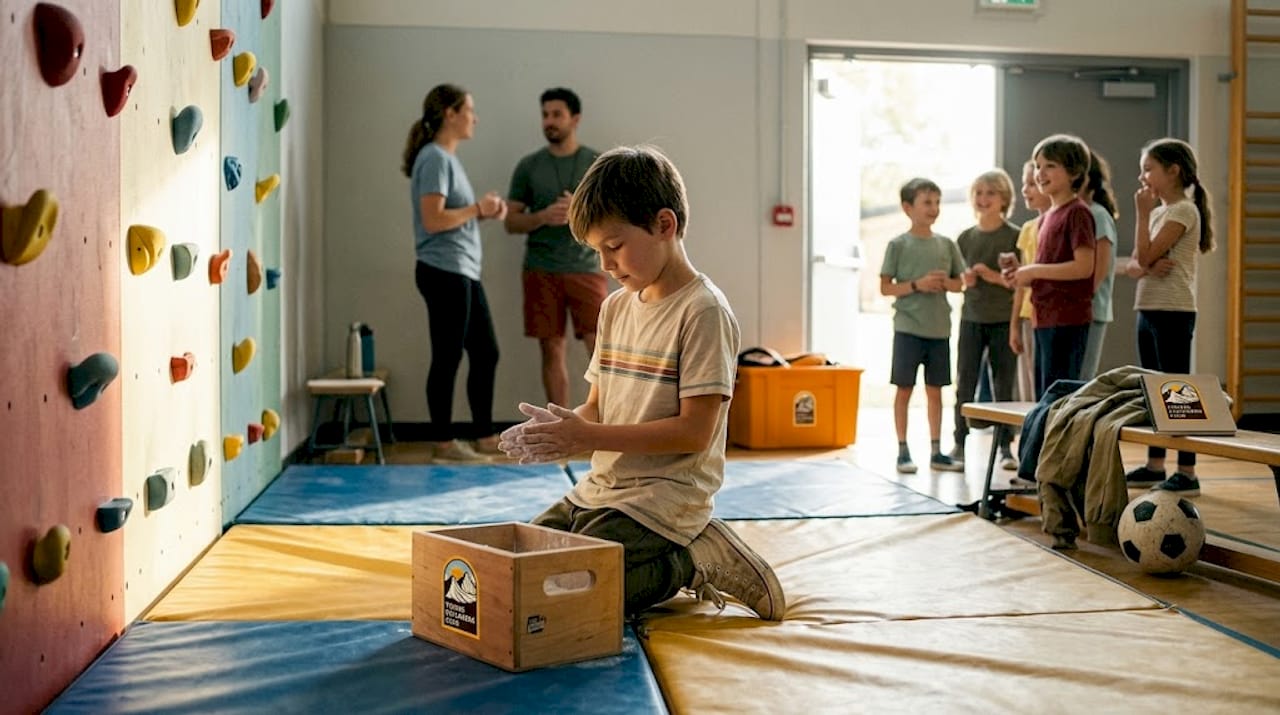
A key expert nuance for parents is that “adventure” must be safety- and age-calibrated: selecting appropriate activities and supervision, and planning for child safety during travel. This is where many families get nervous, and rightly so. But the best programs have already solved this problem through rigorous planning.
Here is a comparison of typical activities alongside their educational outcomes and supervision requirements:
| Activity | Educational outcome | Supervision level |
|---|---|---|
| Hiking | Navigation, endurance, environmental awareness | Guide-led with group ratios |
| Rock climbing | Risk assessment, trust, physical confidence | 1:4 or 1:6 instructor ratio |
| Canoeing | Teamwork, water safety, coordination | Certified water safety staff |
| Ropes course | Communication, leadership, problem-solving | Trained facilitators on-site |
| Survival skills | Resourcefulness, planning, self-reliance | Expert instructor-led sessions |
Understanding why adventure activities matter for your child’s development makes the table above much more meaningful. Each activity is a vehicle for growth, not just a way to fill an afternoon.
Here are the key steps that good organizers and informed parents should take to ensure safe, enriching travel:
- Verify guide credentials before booking. Ask specifically about wilderness first aid certification and child supervision training.
- Review the activity schedule against your child’s age and current fitness level.
- Ask about group size and the ratio of staff to participants for every activity.
- Request the emergency procedures document and make sure you understand what happens if something goes wrong.
- Talk to your child about what to expect, including the harder moments, so they feel prepared rather than blindsided.
- Check the program’s track record through reviews, testimonials, and any available safety records.
Pro Tip: Always ask the program director to walk you through a specific day’s schedule in detail. How they answer that question tells you everything about how seriously they take safety and structure.
Popular family adventure activities by age
Understanding the value of learning and safety leads naturally to the question of what activities best fit different age groups. Not every activity is right for every child, and the best programs know this. They design their offerings around developmental stages, not just physical ability.
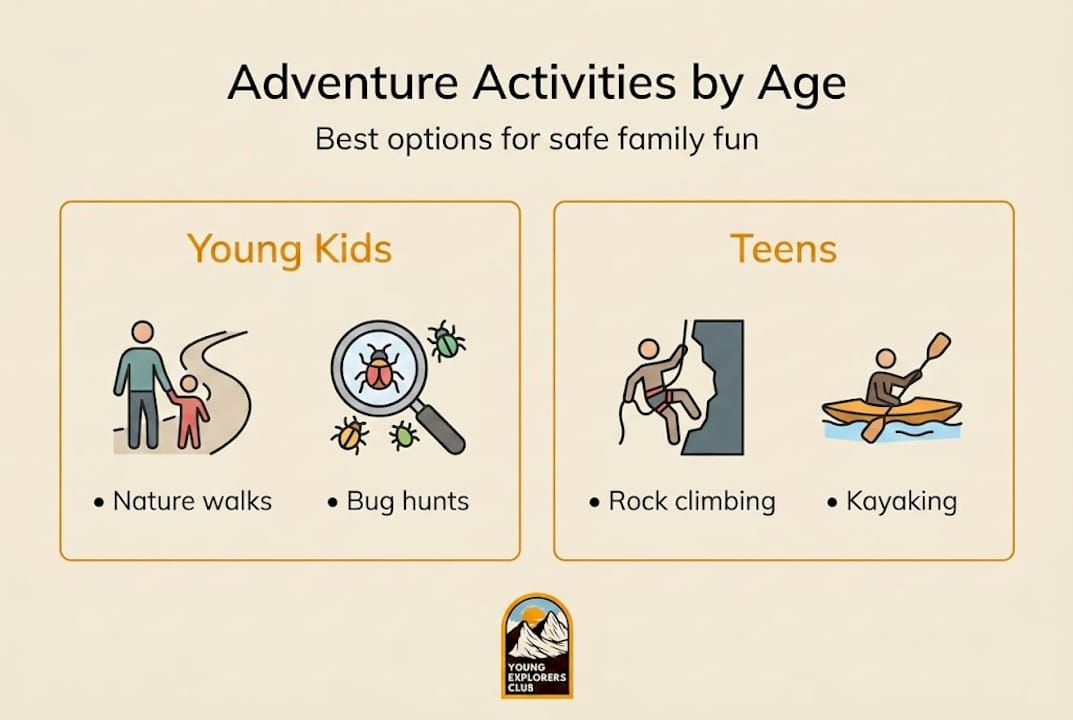
Adventure activities must be matched to the age and ability of children to maximize fun and minimize risks. This is not just common sense. It is the standard that separates quality programs from generic outdoor trips.
Here is a breakdown of activities that work well across the three main age groups:
Ages 8 to 12 (elementary school):
- Nature scavenger hunts and guided forest exploration
- Beginner hiking on well-marked trails with moderate elevation
- Introduction to canoeing on calm, flat water
- Low ropes courses focused on teamwork and communication
- Basic survival skills like knot-tying and shelter identification
- Supervised swimming and water games
Ages 13 to 15 (middle school):
- Multi-day hiking with overnight camping
- Intermediate rock climbing with lead belaying introduced
- Whitewater canoeing or kayaking on Class I and II rivers
- High ropes courses and zip lines
- Mountain biking on beginner to intermediate trails
- Team-based orienteering challenges
Ages 16 to 17 (high school):
- Extended backcountry hiking and wilderness navigation
- Sport climbing and bouldering at outdoor crags
- Multi-sport adventures combining cycling, paddling, and trekking
- Leadership roles within group challenges
- Survival skills including fire-making and wilderness first aid basics
- Cross-country mountain biking on technical terrain
You can explore a detailed camp activities list for kids in 2026 to see how programs structure these progressions across a full season.
Here is a comparison table showing how activities scale with age:
| Age group | Activity type | Challenge level | Supervision ratio |
|---|---|---|---|
| 8 to 12 | Nature exploration, beginner hiking, low ropes | Low to moderate | 1:4 to 1:6 |
| 13 to 15 | Multi-day hiking, intermediate climbing, kayaking | Moderate to high | 1:5 to 1:8 |
| 16 to 17 | Backcountry trekking, sport climbing, multi-sport | High | 1:6 to 1:10 |
The family multi-adventure camp model is particularly effective because it allows siblings of different ages to participate together while still receiving age-appropriate challenges. This keeps the whole family engaged without anyone feeling bored or overwhelmed.
How to choose the right family adventure trip
With a clear sense of available activities, families are ready for practical, actionable guidance on selecting and arranging the best trip. The options can feel overwhelming, but a simple framework makes the decision much easier.
The core criteria for evaluating any family adventure program come down to five things: age fit, safety standards, educational value, guide quality, and group size. If a program scores well on all five, it is worth serious consideration. If it is vague or evasive on any one of them, keep looking.
Selecting appropriate activities and supervision is essential for child safety during adventure travel. This is the non-negotiable starting point. Before you look at price, location, or amenities, confirm that the program has a clear, documented approach to matching activities to your child’s age and ability.
Here are the steps to planning your first family adventure journey:
- Define your goals as a family. Are you looking for personal development, language learning, a specific sport, or simply time in nature together? Knowing your “why” narrows your options quickly.
- Research programs by age group and read their activity descriptions carefully. Look for specific language about safety protocols and educational outcomes.
- Contact the program directly and ask the five core questions: What is the guide-to-child ratio? What certifications do guides hold? What is the emergency response plan? How are activities adapted for different ability levels? What is the cancellation and medical policy?
- Read reviews from other families, not just testimonials on the program’s own website. Look for patterns in what parents say about safety, communication, and how their children responded.
- Book a trial experience if possible before committing to a longer program. Many quality programs offer shorter introductory sessions.
- Prepare your child by talking through the itinerary, acknowledging that some moments will be hard, and framing those moments as the ones they will remember most.
Pro Tip: Involve your kids in the selection process from the beginning. Show them the activity descriptions, ask what excites them, and let them have a real voice in the decision. Children who feel ownership over the choice arrive more motivated, more open, and more willing to push through the tough moments.
Exploring active holidays that kids actually love can also give you a strong sense of what resonates with children at different ages. And if you are organizing a trip for a school group or larger family gathering, custom group adventures offer tailored options that take the planning pressure off parents entirely.
Why adventure learning changes families for good
Here is something most articles about family adventure travel miss entirely: the most valuable part of these experiences is not the activities. It is what happens between the activities.
When a child struggles to get up a rock face and finally reaches the top, the parent watching from below is not just proud. They are seeing their child differently. And the child, looking back down, is seeing themselves differently too. That moment of shared recognition, of I did not think I could do that, is the kind of thing that reshapes a relationship. It cannot be manufactured at a resort or replicated on a screen.
Conventional vacations are wonderful, but they are largely passive. You arrive somewhere beautiful, you consume experiences, and you leave. Family adventure travel is different because it requires something from everyone involved. It asks kids to be brave, to be patient, to work with others, and to keep going when they want to stop. Those are not vacation memories. Those are character-building experiences.
What most parents overlook is that the hard moments are the point. The moment your teenager is cold and tired and has to choose between giving up and pushing through is exactly the moment that matters most. That is where resilience is actually built, not in the comfortable parts of the trip. Programs that understand this design their challenges intentionally, with just enough difficulty to stretch kids without breaking them.
The research on adventure and teen resilience consistently shows that these experiences have effects that last well beyond the trip itself. Teens who complete outdoor challenge programs report higher self-esteem, better stress management, and stronger relationships with peers and family members for months afterward.
As outdoor educators, we have seen this pattern hundreds of times. A shy 10-year-old arrives nervous and leaves leading her group. A teenage boy who barely spoke to his parents before the trip spends the whole drive home telling stories. These are not coincidences. They are the predictable outcomes of well-designed adventure learning. And they are available to your family too.
Next steps: Finding trusted family adventure programs
If this article has sparked something in you, the next step is finding a program that brings it all together: structure, safety, genuine outdoor challenge, and the kind of guided learning that sticks.

At the Young Explorers Club, we have built our programs around exactly the principles covered here. From our weekly adventure club for younger children to our internationally recognized teen summer camp in Switzerland, every program is designed with age-appropriate challenge, certified guides, and clear educational outcomes at its core. Our bilingual environment, optional language courses, and multi-sport offerings make us one of the most complete youth adventure programs in Europe. Whether you are looking for a week-long introduction or a full summer experience, our team is ready to help you find the right fit for your child.
Frequently asked questions
What age is best for family adventure travel?
Family adventure travel is best suited for kids 8 to 17, since activities and educational elements are typically tailored for this age group, with clear progressions in challenge and supervision.
Is family adventure travel safe?
Yes, when programs are age-calibrated, use trained guides, and have clear safety protocols. Safety and supervision must match the age and ability of every child in the group.
How do I pick a family adventure trip?
Choose by matching the trip’s activities, safety standards, and educational focus to your child’s age and interests. Selecting appropriate activities and asking direct questions about supervision and emergency plans is the best starting point.
What kinds of activities can families expect?
Expect hiking, canoeing, ropes courses, and supervised outdoor challenges, all customized by age group and skill level. Outdoor adventure travel can include experiential challenges such as climbing, canoeing, and multi-sport activities suited to youth development.
Recommended
- Why Outdoor Learning Sticks Better Than Classroom Lessons | Young Explorers Club Switzerland
- The Power Of Outdoor Learning: Why It Works | Young Explorers Club Switzerland
- Helping Kids Build Confidence Through Adventure | Young Explorers Club Switzerland
- Why Singaporean Families Value Risk-managed Adventure | Young Explorers Club Switzerland