Family camp planning checklist for unforgettable adventures
Build a family camp checklist that works for every age and destination, including what international camps really require, from gear to documents to expert tips.
TL;DR:
- A well-structured checklist covers shelter, sleep, safety, kitchen, clothing, and educational tools.
- Customizing your packing list based on destination, duration, and family needs is essential.
- International camps require specific documentation and gear considerations for safety and climate.
Planning a family camp trip sounds exciting until the reality of coordinating gear, safety documents, age-appropriate activities, and international logistics hits you all at once. With kids ranging from curious 8-year-olds to independent-minded 17-year-olds, there is no single formula that works for every family. The good news is that a well-built checklist transforms an overwhelming project into a manageable, even enjoyable process. This article walks you through core categories every family needs, how to customize your list for your specific trip, what international camps demand, and the most commonly overlooked items that can make or break a camp experience.
Table of Contents
- Core categories every family camp checklist must cover
- How to adapt your checklist: Customizing for your family and trip
- International family camps: What’s special about cross-border preparation
- The overlooked essentials: Expert tips for smooth, safe adventures
- Why most checklists fail: The case for family-specific, skill-building preparation
- Plan your adventure with Young Explorers Club
- Frequently asked questions
Key Takeaways
| Point | Details |
|---|---|
| Cover the essentials | A complete checklist must include gear, clothing, safety, food, and educational items tailored to your family. |
| Customize for your trip | Always adjust your checklist for destination, duration, children’s ages, and adventure level to avoid surprises. |
| Involve your kids | Engaging children in planning and packing builds their skills and confidence. |
| Prep for international camps | International camps demand extra paperwork, health checks, and careful planning well ahead of time. |
| Expert tips matter | Real-world advice like practice runs and packing extra snacks helps ensure a smooth camp experience. |
Core categories every family camp checklist must cover
Think of your checklist not as a single shopping list but as six interlocking systems. When each one is solid, everything else holds together.
According to complete packing guidance, a reliable family camp checklist breaks into these core categories: shelter (tent sized larger than your family count, footprint, stakes), sleep system (bags rated 10°F below expected lows, sleeping pads for every person), safety (first aid kit, navigation tools, lighting), kitchen (stove, cookware, water at one gallon per person per day), clothing (a layered system plus rain gear), and educational tools (journals, field guides). Each category serves a distinct function, and skipping one creates a gap that almost always shows up at the worst possible moment.
Here is a quick-reference breakdown:
| Category | Key items | Why it matters |
|---|---|---|
| Shelter | Tent (one size up), ground footprint, stakes | Weather protection and sleeping room |
| Sleep system | Sleeping bags, insulated pads | Temperature regulation and rest quality |
| Safety | First aid kit, headlamps, compass/GPS | Emergency response and navigation |
| Kitchen | Camp stove, cookware, water filtration | Nutrition, hydration, and meal planning |
| Clothing | Base layers, insulating mid-layer, rain jacket | Comfort and protection across weather |
| Educational tools | Journals, field guides, map printouts | Curiosity-building and learning on the trail |
Several items fall through the cracks even for experienced campers. Do not let these slip off your list:
- Biodegradable soap and a portable wash basin
- Glow sticks or colored tent markers for night navigation around a campsite
- A dedicated wet bag for damp clothing and gear
- Extra batteries or a solar charger for safety devices
- A physical copy of emergency contact information
You can cross-reference your checklist against a core packing material list to make sure nothing critical gets left out.
Pro Tip: Always buy or rent a tent one size above your family count. A family of four should use a six-person tent. The extra space handles wet gear, fidgety kids, and unexpected guests like sudden rain at 2 a.m.
How to adapt your checklist: Customizing for your family and trip
With the basics outlined, the next step is making your checklist truly work for your family and unique plans.
No two families camp the same way. A weekend trip to a lake in summer looks nothing like a two-week residential program in the Swiss Alps. Customization is essential because terrain, weather, duration, and the specific needs of kids aged 8 to 17 all shift what belongs on your list. The same logic applies to the structure of your camp: are parents staying on-site, or is this a drop-off program? Day camp needs far less packing than a full overnight stay.
Generic lists fall short in real-world scenarios. A checklist built for a beach trip offers almost no guidance for alpine conditions, and a list designed for a solo adult traveler ignores the emotional and developmental needs of children entirely. Customization is not optional. It is the difference between a stressful trip and a confident one.
Here is a step-by-step method to personalize your checklist:
- Define your destination type. Mountain, lake, forest, or urban base camp? Each changes clothing, footwear, and safety priorities.
- Lock in the duration. A one-night test run needs minimal gear. A two-week international stay requires a full system review.
- List every child’s age and ability. What can an 8-year-old carry? What responsibilities can a 16-year-old take on?
- Identify the camp format. Day camp, overnight residential, or family travel camp? Each has a different packing footprint.
- Review the weather forecast and elevation. Check 10-day predictions and pack for conditions 10°F cooler than the average low.
- One week out, review gear and meals. Lay everything out, check for damage, replace expired supplies.
- The night before, load non-perishables. Pre-packing food and non-urgent gear the night before reduces morning stress dramatically.
If you are exploring inclusive camp options, the customization step becomes even more important because specific needs may require additional preparation around communication tools, comfort items, or adapted gear.
Pro Tip: Get your kids involved at every stage that matches their age. Kids aged 8 to 10 can gather small items and help organize their own bag. Teens aged 14 to 17 can take the lead on gear checks or even plan a segment of the hike. This builds ownership, confidence, and genuine excitement.
International family camps: What’s special about cross-border preparation
Customizing your list is essential, but international trips require specific prep. Here is how to tackle those requirements confidently.
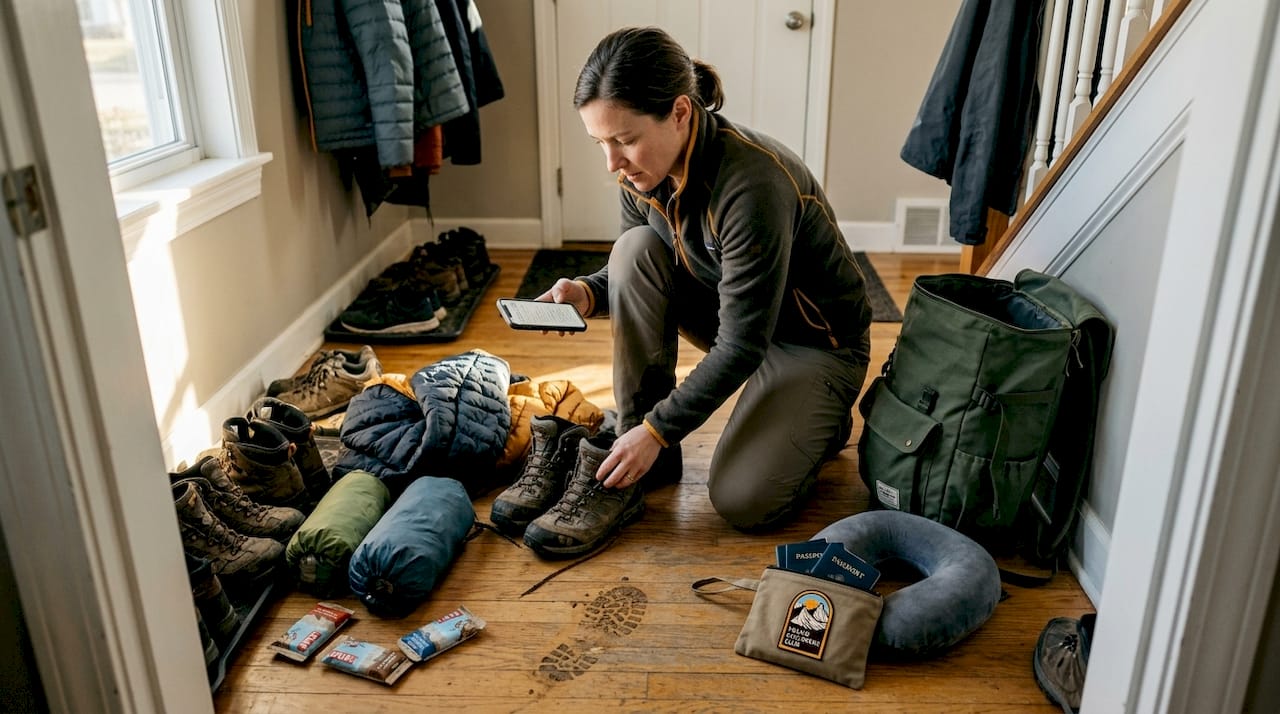
Crossing a border with children, especially for a structured camp program, introduces a layer of documentation and logistics that domestic trips simply do not require. International camp preparation includes verifying passport validity (at least six months beyond your return date), completing required medical forms, confirming immunizations are current, setting up a written allergy action plan, and arranging international travel insurance that covers adventure activities.
Packing for alpine or mountain climates adds another layer. Conditions in the Swiss Alps, for example, can swing from warm sunshine to near-freezing winds within hours. Accredited adventure camps recommend prioritizing labeled gear, SPF 50+ sunscreen, insulated layers, and a reusable water bottle for every child.
Here is a side-by-side comparison of domestic and international camp preparation:
| Preparation area | Domestic camp | International camp |
|---|---|---|
| Travel documents | Photo ID recommended | Passport (6+ months validity required) |
| Medical forms | Basic health form | Full medical history, allergy plans, immunization records |
| Insurance | Standard health coverage | International travel and adventure activity insurance |
| Clothing system | Region-specific layers | Layered system for alpine climate shifts |
| Sun and weather protection | Standard SPF | SPF 50+, UV-protective clothing |
| Gear labeling | Helpful | Essential, often required by camp staff |
Additional items that families frequently forget for international programs:
- A photocopy of every key document stored separately from the originals
- A universal power adapter (critical for Switzerland and much of Europe)
- A brief written summary of your child’s medical needs in the destination country’s language
- Comfort items for younger campers, especially a familiar blanket or small toy for the first night
Exploring international camp experiences ahead of time helps families understand what host programs provide versus what you must bring, which can simplify packing significantly.
The overlooked essentials: Expert tips for smooth, safe adventures
Some of the most stressful camp moments come from things you forget. Here is how to close those gaps before they become problems.
The items that derail trips are rarely the big ones. You remember the tent. You remember the sleeping bags. What you forget is the spare flashlight battery, the backup snacks for the third day, or the dry bag that would have kept your child’s only warm layer usable after an afternoon rainstorm.
Experts consistently recommend: practice your setup at home, overpack snacks while keeping clothing minimal, and for first-timers, keep the initial trip to one or two nights before committing to longer programs. A short trial run reveals gaps you could never anticipate from a list alone.
“The most valuable preparation you can do before any camp trip is not buying new gear. It is setting up your tent in the backyard, cooking a camp meal in your kitchen, and letting your kids discover what they actually need.”
With around 14 to 15 million US kids attending camps every year, the research on what makes camp genuinely impactful is deep. Adventure programs consistently show measurable gains in confidence and resilience, with statistically significant results. Swiss programs with J+S accreditation, for instance, maintain staff-to-camper ratios between 1:4 and 1:10, which directly affects safety and individualized attention.
Frequently overlooked items worth adding to your final checklist:
- A refillable snack container (trail mix, dried fruit) for mid-activity energy
- Waterproof matches or a backup fire starter beyond the primary lighter
- A small comfort object for children aged 8 to 11 to ease nighttime anxiety
- A lightweight repair kit for gear (tent poles, sleeping pad patch kit)
- Journals or illustrated field guides to turn every walk into an educational moment
Building moments of discovery into your checklist pays off. Resources on building character at camp show that structured reflection, even something as simple as a journal entry after a hike, accelerates the personal growth that makes camp memorable long after the trip ends.
Pro Tip: Pack one dedicated journal per child. Give it to them the morning you leave home, not when you arrive at camp. That extra time in transit becomes their first observation log, and it sets the tone for an adventure mindset from the very start.
Why most checklists fail: The case for family-specific, skill-building preparation
With all the essentials and tips understood, it is worth examining what really separates good camp planning from a genuinely transformative process.
Most parents download a generic camp checklist, check boxes, and feel ready. But a universal list creates a false sense of security. It does not account for your child’s anxiety about sleeping away from home, your family’s specific rhythm, or the difference between preparing for a beach trip versus alpine terrain. Generic lists fall short because they treat planning as a logistics exercise when it is actually a relationship exercise between parents, kids, and the experience ahead.
The real opportunity in checklist preparation is skill-building. When you hand your 10-year-old the responsibility of packing their own bag and checking it against a list, you are not just saving yourself time. You are teaching organization, accountability, and self-reliance. When your teenager cross-checks gear before a hike, they are learning judgment under real conditions.
Adventure camps, especially bilingual camp environments, are designed for growth, not just activity. The preparation process should reflect that same intention. A checklist that involves your child is not just more complete. It is the first lesson of the trip.
Plan your adventure with Young Explorers Club
Ready to turn your checklist into a real adventure? Young Explorers Club in Switzerland offers expertly designed programs built around exactly the kind of intentional, growth-focused camp experience this article describes.
Whether you are looking for teen summer camp options that challenge and inspire, or custom camp experiences tailored to your group’s goals, Young Explorers Club Switzerland has programs that take care of the hard planning so your family can focus on the experience. From mountain biking and climbing to survival skills and bilingual immersion, every program is designed to build confidence, resilience, and memories that last. Reach out to explore which program fits your family best.
Frequently asked questions
What’s the most common item families forget for camp?
Families most often forget rain gear and extra snacks, along with backup lighting like a spare flashlight. These small gaps create the biggest discomfort on the trail.
How early should we start preparing for an international family camp?
Start at least six months before travel. Passport validity requirements and immunization schedules alone can take weeks to complete, and rushing these creates unnecessary stress.
What’s the ideal way to involve kids in camp prep?
Assign tasks by age: kids aged 8 to 10 can pack their personal bag, while teens aged 14 to 17 can lead gear checks and help plan the daily schedule.
Why is customizing the checklist so important?
A customized checklist accounts for your child’s age, the camp environment, and the trip format. Generic lists fail when they ignore the real differences between destinations and family dynamics.
Recommended
- The Complete Family Camp Checklist: Essentials For Outdoor Adventures
- Adventure Camp Activities List For Kids: 2026 Guide
- The Best Ways To Document Your Child’s Camp Experience | Young Explorers Club Switzerland
- The Ultimate Checklist For Preparing Your Child For Summer Camp | Young Explorers Club Switzerland
- Disneyland Paris: Besondere Übernachtungen für Familien – 2000-reisen