
How Swiss Camps Prepare Children For Global Citizenship
Young Explorers Club: Swiss multilingual language-immersion & outdoor camps for ages 6-17, IB/UNESCO-aligned, CEFR-assessed gains.
Young Explorers Club — Program Overview
We, at the Young Explorers Club, tap into Switzerland‘s everyday multilingualism, large international communities and Alpine terrain to create real cross-language experiences and place-based outdoor learning. These settings build language skills, intercultural awareness and environmental literacy. We run programs from day camps to multi-week residentials. They align with IB and UNESCO GCED frameworks. We use CEFR-aligned assessments and validated intercultural tools to measure gains in language, leadership and civic responsibility.
Programs
Our offerings are designed to be experiential, place-based and linguistically meaningful. Program formats include:
- Language immersion and outdoor/adventure camps
- Arts and STEM focused sessions
- Eco and environmental literacy programs
- International exchange and intercultural workshops
- Age ranges: 6–17; durations: day formats and 2–8 week residentials
Assessment & Alignment
We align objectives with recognized frameworks and measure impact with robust tools:
- CEFR-aligned pre/post tests to quantify language gains
- Validated intercultural inventories to track intercultural competence
- Contact hours, staff qualifications and student:teacher ratios as operational quality metrics
- Outcomes reported include language progress, leadership and civic responsibility indicators
Key Takeaways
- Authentic context: Switzerland’s multilingual environment and international population create frequent, authentic cross-language and place-based learning opportunities.
- Diverse program types: Offerings span language immersion, outdoor/adventure, arts/STEM, eco-programming and international exchange.
- Targeted outcomes: Camps intentionally target language, intercultural communication, civic responsibility, environmental literacy, collaboration, leadership and digital literacy.
- Framework alignment: Programs align goals with IB and UNESCO GCED frameworks.
- Measured impact: We measure impact using CEFR-aligned tests, contact hours, staff credentials, ratios and validated intercultural tools.
For Parents and Partners
When evaluating programs, request the following to ensure transparency and quality:
- Cantonal approval numbers and activity certifications
- Staff credentials, including background checks and relevant training
- Incident-rate reports and safety protocols
- Outcome evidence: language gains, participant satisfaction, measures of global awareness and retention
Why Swiss camps are uniquely positioned to build global citizens
Switzerland’s everyday multilingualism and international mix give our camps a real advantage. The country recognizes four national languages (German, French, Italian, Romansh) (Swiss Federal Statistical Office / FSO), and roughly ~25% foreign nationals are part of the population (FSO). We use those facts to create frequent, authentic cross‑language encounters. The Alpine landscape — abundant Alps / mountainous terrain — lets us pair language and intercultural learning with place‑based outdoor education (FSO). Strong cantonal approval systems and FOSPO guidance anchor our safety and educational standards (FOSPO).
Common camp formats, ages and program lengths
Below are the formats we run and the typical participant windows; these give a sense of scope and who benefits most.
- Language‑immersion (German/French/Italian/English) — full‑day and half‑day immersion tracks.
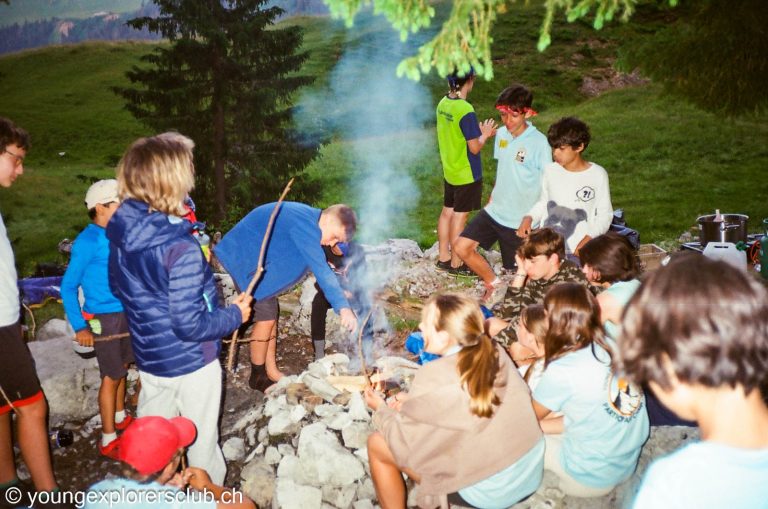
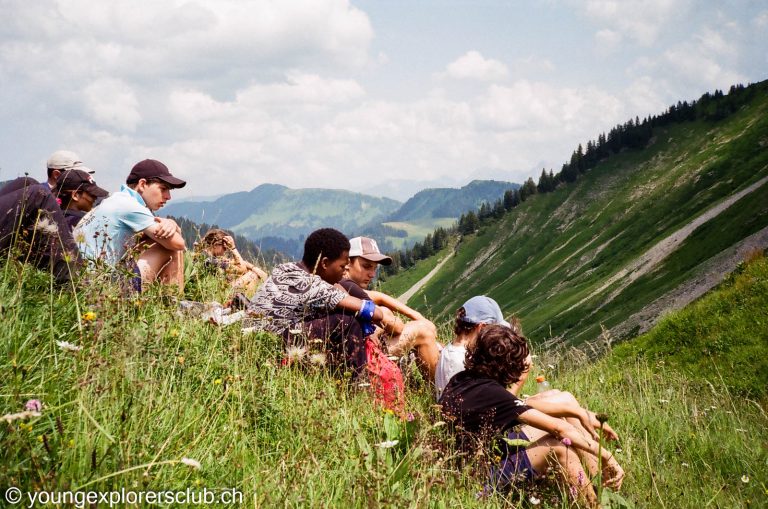
- Outdoor/adventure — hiking, mountaineering, alpine skills with activity certification.
- Arts/STEM and design‑thinking challenges.
- Eco/sustainability camps and conservation projects.
- International exchange programs with school and NGO partners (Pro Juventute, Swiss Alpine Club).
Typical participant ages are 6–17. Typical program lengths range from day camps of 1–2 weeks to residential summer programs of 2–8 week residential camps. The table below gives a compact illustrative orientation.
| Program type | Typical length | Typical contact hours (approx.) | Typical learning outcomes |
|---|---|---|---|
| Day camp | 1–2 weeks | 10–40 hours | Exposure to language/culture; taster activities; social skills |
| Short residential | 2–3 weeks | 40–120 hours | Measurable language gains (intro level); team skills; basic outdoor competencies |
| Long residential | 4–8 weeks | 160–600+ hours | Stronger language progress (multiple CEFR sublevels possible), leadership, sustained service projects, deeper intercultural learning |
Core competencies and how we measure impact
I align camp outcomes with the IB learner profile and UNESCO GCED to make competency targets explicit (IB learner profile; UNESCO GCED). Core competencies we focus on include language skills, intercultural communication, civic responsibility, environmental literacy, collaboration, leadership and digital literacy.
Practical modules map directly to those competencies: Model UN‑style debates for critical thinking and leadership; service projects for civic responsibility and collaboration; design‑thinking/STEM for problem solving and digital literacy; conservation projects for environmental literacy; digital safety workshops for responsible online behaviour.
Assessment is concrete and repeatable. We use CEFR‑aligned pre/post tests and report contact hours, teacher qualifications and student:teacher ratios alongside gains. For intercultural competence we pair short pre/post surveys with validated tools such as the Intercultural Development Inventory.
Sample measurable targets we report include:
- Pre/post tests showing language gains.
- Participant satisfaction (target: 70%+ satisfaction).
- Global awareness self‑report (60–80% increased global awareness).
- Retention/return rates (20–40% retention).
I recommend parents and partners ask for cantonal approval numbers, activity certifications, staff qualifications (first aid/CPR, criminal background checks) and incident rate disclosures (incident rate per 1,000 participant‑days).
Read more about how international summer camps structure global learning in our overview of international summer camps.

Sources
Swiss Federal Statistical Office — Population and households
Swiss Federal Statistical Office — Languages
Swiss Federal Statistical Office — Land use (geography and terrain)
Federal Office of Sport (BASPO / FOSPO) — Federal Office of Sport (home)
Pro Juventute — Children and youth services
Swiss Alpine Club (SAC) — Safety, training and mountain information
UNESCO — Global Citizenship Education (GCED)
International Baccalaureate (IB) — The IB learner profile
Intercultural Development Inventory (IDI) — The Intercultural Development Inventory
Council of Europe — Common European Framework of Reference for Languages (CEFR)
Eurydice (European Commission) — Teaching and learning languages at school in Europe