

TL;DR:
- Preparing all required documents early ensures a smooth registration process and secures your child’s spot for popular camps.
- Online registration systems handle digital signatures and updates securely, but parents should verify their camp’s update policies before submitting.
- Involving children in planning increases their cooperation and excitement, making the camp experience more positive for everyone involved.
Signing your child up for an adventure-focused family camp sounds exciting until you’re staring at a stack of forms, wondering what a liability waiver actually covers and whether you missed a deadline. The family camp participation workflow is more layered than most parents expect, covering everything from gathering medical documents to authorizing pickups on the last day. This guide walks you through the entire process, step by step, so you know exactly what to prepare, when to act, and how to set your child up for an experience they’ll talk about for years.
Key takeaways
| Point | Details |
|---|---|
| Prepare documents early | Gather medical history, emergency contacts, and custody paperwork before registration opens. |
| Registration windows close fast | Most camps open registration January through March, and popular programs fill within days. |
| Digital waivers are legally binding | Online consent forms signed through camp platforms carry full legal weight in all U.S. states. |
| Involve kids in planning | Children who help choose activities and pack their gear show far greater cooperation and enjoyment at camp. |
| Final check-in requires paperwork | Bring physical or digital copies of all consents, custody documents, and medical authorizations on arrival day. |
What the family camp participation workflow actually requires
Before you open a single registration form, there is a layer of preparation that most parents skip. Jumping straight into online registration without the right documents in hand leads to half-finished forms, processing delays, and in some cases, a lost spot.
The standard registration workflow requires camper information, medical history, emergency contacts, liability waivers, and payment details. That sounds manageable until you realize “medical history” means medication lists, allergy action plans, vaccination records, and your child’s physician’s contact details. “Emergency contacts” means multiple, verified, and current phone numbers, not whoever is saved in your phone.
Here is what to gather before you begin:
- Camper profile: Full legal name, date of birth, current address, and school grade
- Medical history: Diagnoses, medications with dosages, known allergies, and vaccination records
- Emergency contacts: At least two contacts with relationships clearly stated
- Custody documentation: If applicable, written custody arrangements and any court-ordered pickup restrictions
- Insurance information: Health insurance provider and policy number
- Payment method: Credit card or checking account details ready for deposit
The custody piece deserves special attention. Many parents treat it as a formality, but camps require explicit legal custody details to release a child safely and lawfully. If there are restrictions on who can pick up your child, those need to be documented with specificity, not just mentioned verbally on arrival day.
Pro Tip: Create a dedicated folder, physical or digital, that holds all your child’s camp documents. Update it each year. When the next registration window opens, you will not be scrambling to find vaccination records from three years ago.
Submitting registration early dramatically increases your chances of securing spots in the programs your child actually wants, since popular camps fill within days of opening. Most registration windows open in January through March, with deposits typically ranging from $50 to $300 to hold a spot. Non-refundable deposits are standard, so confirming your dates before paying matters.
How to complete the family camp registration process online
Modern adventure camps manage their entire family camp registration process through online platforms, which is genuinely good news once you understand how they work. These systems handle form submission, digital signatures, payment tracking, and post-registration updates in one place. Online platforms handle enrollment securely and give you a real-time record of what you have submitted and what is still pending.
Here is how the process typically unfolds, step by step:
- Create your camper profile. Enter all personal and medical details accurately. This profile becomes the source of truth for camp staff throughout the session.
- Complete the medical consent form. This authorizes camp medical staff to provide routine care and, in emergencies, seek hospital treatment on your behalf.
- Sign the activity risk disclosure. For adventure camps covering climbing, mountain biking, or survival skills, this form is specific to the activities involved. Read it carefully, not just to sign it faster.
- Submit the liability waiver. Digital signatures are legally binding across all U.S. states under ESIGN and UETA legislation, so the online version carries the same legal weight as a signed paper copy.
- Add a photo release. Most camps photograph activities for newsletters and social media. Opting out is usually possible but must be stated explicitly during registration.
- Enter pickup authorizations. List every person permitted to collect your child by name and relationship. If a court order limits pickup rights, upload that document here.
- Pay the deposit. Complete the initial payment to secure the booking. Note the balance due date and set a calendar reminder.
- Confirm your submission. Check your email for a confirmation message. If nothing arrives within 24 hours, contact the camp directly. Lost form submissions happen more than camps like to admit.
Pro Tip: Before submitting, screenshot or print every completed form page. If a technical glitch loses your data mid-submission, you will have everything needed to resubmit within minutes rather than starting over.
A common mistake worth flagging: parents list a single emergency contact and one authorized pickup person, then later realize a grandparent or neighbor needs to be added. Some platforms lock this field after submission. Check the camp’s update policy before you finalize, so you know whether changes require staff intervention or can be made independently.
The Youngexplorersclub camp preparation form is a strong example of how digital intake can be organized to guide parents through each required step without overwhelming them.
Getting the whole family involved before camp starts
One of the most underrated tips for camp involvement is treating preparation as a family project rather than a parental task. Research shows that involving kids in planning increases their cooperation and enjoyment at camp by roughly twice compared to children who had no input. That is a significant return for a 30-minute conversation around the kitchen table.

The key is giving children age-appropriate decisions. A seven-year-old can choose which activities to prioritize from a list you pre-screen. A twelve-year-old can help research what gear to pack, compare options, and take ownership of their own packing checklist. A teenager can read through the activity schedule and flag what excites them most. None of this adds administrative work for you. It shifts their orientation from “being sent to camp” to “going to camp.”
Here is a simple family activity planning approach that works well three to four weeks before departure:
- Hold a 20-minute family meeting to look at the camp schedule together and let your child circle their top three activities
- Assign your child one concrete preparation task, such as making their own packing list based on the camp’s provided list
- Watch videos or read about the location together. For Swiss Alps programs, even a five-minute video of the terrain builds real anticipation
- Talk openly about the adjustment period. First-day nerves are normal, and naming that in advance reduces the shock when it happens
“Children who feel like co-owners of their camp experience arrive with a completely different attitude. They have already mentally committed, which makes the transition on day one far smoother for everyone involved.” — Planning a Family Camping Trip
Family planning meetings also give you a natural window to set expectations about technology use, homesickness, and communication policies during camp. These conversations are much easier to have at home, calmly, than on drop-off morning when emotions are already running high.
Final steps before arrival day
The week before camp is where the process gets specific. Effective camp workflows depend on parents completing a set of final actions in the right order, and missing one can cause real delays on arrival day.
| Task | Deadline | Notes |
|---|---|---|
| Pay remaining tuition balance | Per camp invoice, typically 2-4 weeks before start | Late payment may result in forfeiting the spot |
| Update medical information | Up to 48 hours before camp start | Online platforms allow post-registration updates to health and contact info |
| Confirm pickup authorizations | At least one week before start | Submit consent forms at least one week early to allow processing time |
| Prepare physical document copies | Day before departure | Bring copies of custody orders, medical consents, and ID |
| Review check-in protocol | Two days before arrival | Confirm check-in location, arrival window, and who needs to be present |
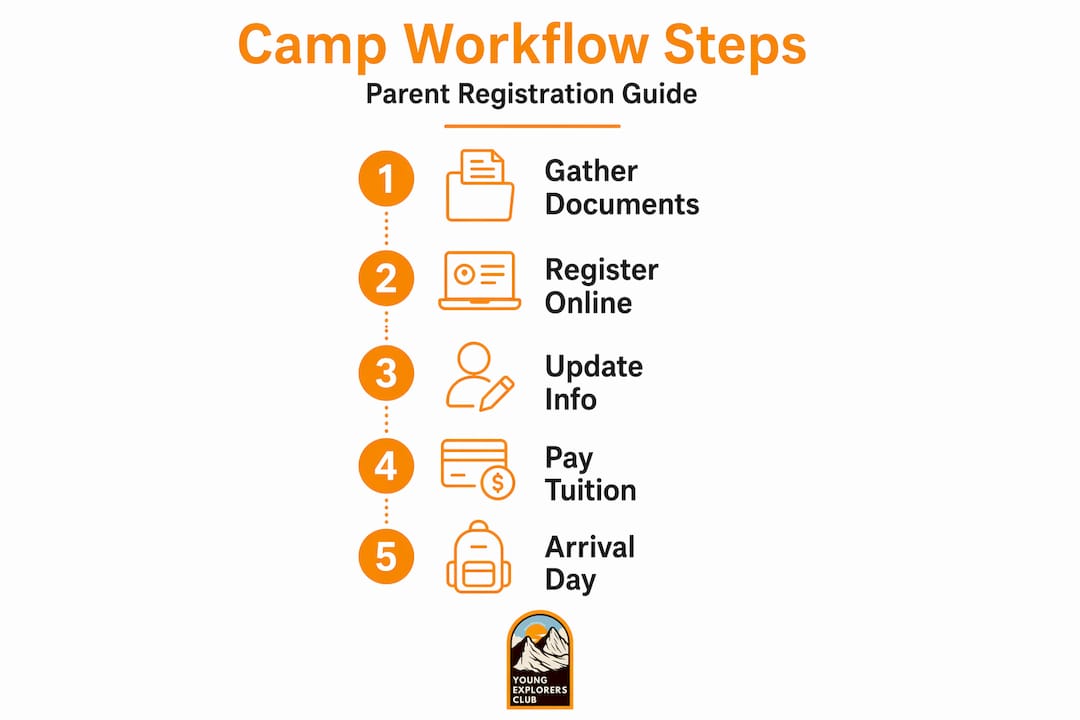
Check-in day logistics trip up more families than any other stage of the process. Most camps require the registered guardian, not just any adult, to complete check-in and sign a physical acknowledgment form. If your schedule means someone else is dropping your child off, verify in writing with the camp whether that is permitted and what that person needs to bring.
Custody issues also surface most visibly at check-in and pickup. Camps take pickup restrictions seriously, and staff will follow the authorized list without exception. If your custody situation has changed since registration, update the platform or contact camp administration directly before arrival. Do not assume a verbal conversation with a counselor on the day will be enough.
My honest take on the enrollment process
I’ve walked through this process with dozens of families over the years, and the pattern is almost always the same. The parents who arrive on day one confident and relaxed are the ones who started preparing six to eight weeks out. Not because the process is technically complex. It is not. But because they gave themselves time to catch errors, update missing details, and actually talk to their kids about what was coming.
What I’ve found catches parents off guard most consistently is the custody documentation piece. It feels like a formality until there is a complication at pickup, and then it suddenly matters enormously. If your family situation involves shared custody, separation, or any restriction on who can collect your child, get that paperwork sorted and uploaded well before you submit the final balance payment.
The other thing I keep coming back to is how much the enrollment experience shapes a child’s first impression of camp. When parents treat registration as a chore to rush through, kids pick up on that energy. When parents frame it as the beginning of the adventure, including kids in decisions, letting them feel excited rather than anxious, those children walk in on day one already belonging to the experience.
My advice: give the process the hour it deserves, gather everything in one sitting, and then involve your child in everything that follows. The paperwork ends. The memories do not.
— Guillem
Experience adventure camp the Youngexplorersclub way

Youngexplorersclub runs international adventure camps in Switzerland designed for children and families who want more than a standard summer program. From mountain biking and climbing to survival skills and multisport expeditions, every session is built around experiential learning in one of Europe’s most dramatic outdoor settings.
The registration process is fully digital, with a clear online workflow that guides families through every required form, from medical consents to pickup authorizations. You can update camper details up until the camp start date, and the support team is available to help with any questions around custody documentation or special health considerations. For families interested in combining outdoor adventure with language development, the family adventure camp program offers a bilingual environment where kids build confidence in English and French alongside their outdoor skills. Spots fill quickly each season, so early registration is strongly recommended.


