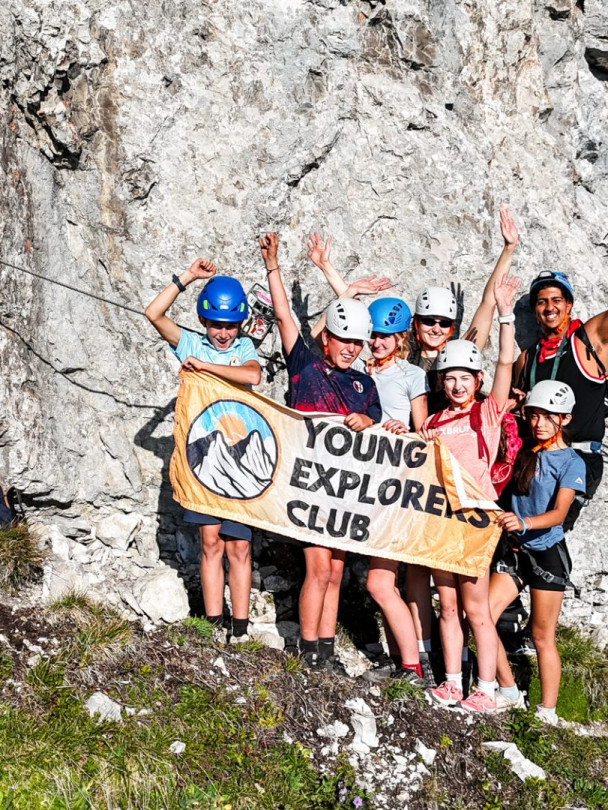
Overview
The Young Explorers Club runs short-term multilingual summer programs across Swiss hubs. Sessions last one to four weeks and are designed for diplomatic and internationally mobile families. Children aged 4–17 join age-appropriate cohorts with flexible schedules so families can choose day or residential stays. Academic continuity is central: we track language gains on CEFR A1–C2 pathways, use placement tests on arrival, and run pre/post assessments to make progress visible. Our staff hold required certifications, we maintain comprehensive medical plans, and we protect diplomatic privacy at every step.
Program Details
Structure and Duration
Programs run in one- to four-week sessions. Each session groups participants into age-appropriate cohorts so activities and learning objectives are tailored to developmental stage.
Languages and Academics
We emphasize language immersion with courses aligned to the CEFR A1–C2 framework. Students receive a placement test on arrival and participate in pre- and post-assessments to demonstrate measurable progress.
Schedule Options
- Day-only attendance for families nearby.
- Residential options for families traveling or needing on-site accommodation.
- Flexible calendars so families can mix and match weeks.
Safety & Medical Protocols
Staffing and Credentials
All staff hold required background checks and role-specific certifications (e.g., first aid, lifeguard, activity instructor qualifications). We require verification of credentials before deployment.
Medical Coverage
- Certified first-aid staff onsite.
- Nurse or doctor on call during program hours.
- Medevac plans and emergency procedures in place.
- Individual medical plans maintained for participants with health needs, with consent-based information sharing to protect diplomatic privacy.
Logistics & Documents
Locations and Travel
Programs operate across Swiss hubs including Geneva, Zurich, and Interlaken, with local site details provided at registration. We provide estimated travel times and arrival instructions to help families plan.
Required Documents
Please prepare the following before arrival:
- Passport (valid for the duration of stay).
- Notarised consent for minors when only one parent travels or for cross-border guardianship situations.
- Insurance information (health and travel).
- Any medical or allergy documentation and medication authorisations.
Assessments & Academic Continuity
Placement and Progress
Students take a short placement test on arrival to ensure correct CEFR-level classing. We use pre- and post-assessments to quantify language gains and provide families with clear progress reports at the end of each session.
Curriculum Continuity
We design modules to support academic continuity so transient students can reintegrate into home-school curricula or embassy schooling with minimal disruption.
Pricing, Accommodations & Discounts
Typical Pricing Ranges
- Day camps: approximately 250–600 CHF/week.
- Residential programs: approximately 900–3,500 CHF/week, depending on accommodation level and extras.
Extras and Transparency
We list all extras up front (meals, excursions, special equipment). Deposit amounts, payment schedules, and cancellation policies are communicated clearly at booking.
Discounts
Sibling discounts and embassy discounts are available where applicable; please request eligibility details during enrolment.
Enrollment & Contact
How to Enrol
To enrol, families reserve a space with the stated deposit, complete the registration form, and submit required documents. Final placement is confirmed after the arrival placement test.
Privacy & Diplomatic Considerations
We adhere to strict diplomatic privacy protocols, limiting data access to essential personnel and using secure channels for sensitive documentation.
Staffing & Quality Assurance
Certifications and Training
All instructors and support staff undergo regular training, hold role-appropriate certifications, and follow documented safeguarding and health procedures.
Evaluation
We review program quality through participant feedback, assessment outcomes, and routine staff audits to ensure consistent standards across locations.
If you would like more specific information about dates, locations, or to request a customised package for an embassy or family cohort, please contact us through the channels provided at registration.
 Watch on YouTube
What the camp offers and who it’s for
We, at the Young Explorers Club, run short-term summer programs (1–4 weeks) for diplomatic and international families based in Switzerland and nearby countries. Our focus is on diplomatic families who move frequently, multi-lingual programming, and academic continuity so children stay on track between postings.
We serve ages 4–17 and divide groups to keep activities age-appropriate and socially comfortable. We design every session to be flexible around variable school calendars and to respect cultural norms common to diplomatic households. Our programs combine day activities, optional overnight options for older cohorts, language support and catch-up or bridging courses.
We staff programs with internationally experienced educators and counsellors who respect diplomatic privacy and cross-cultural sensitivities. We emphasise academic continuity through targeted catch-up lessons and offer regular reports so parents can coordinate with home schools. Health, safety and emergency protocols are part of every session, and families often review medical arrangements before booking.
Cohorts, sessions and capacity
Below I list the typical cohorts, recommended staff ratios, session lengths and capacity ranges you’ll encounter.
- Cohorts and recommended ratios:
- Ages 4–7 — cohort 4–7; recommended staff-to-camper ratio 1:6.
- Ages 8–11 — cohort 8–11; recommended staff-to-camper ratio 1:8.
- Ages 12–14 — cohort 12–14; recommended staff-to-camper ratio 1:10 (increase ratio for high-risk activities).
- Ages 15–17 — cohort 15–17; recommended staff-to-camper ratio 1:10 with a mentoring and leadership focus.
- Typical session lengths:
- 1-week, 2-week, 3-week and 4-week sessions.
- Illustrative popularity: 1-week 15% (illustrative), 2-week 40% (illustrative), 3–4-week 45% (illustrative).
- Capacity:
- Camp capacity 50–300 per session. Small boutique camps run 30–80; large international camps host 150–300.
We recommend families think about continuity and social integration when choosing session length. Two-week sessions offer a good balance between settling in and flexibility. Longer sessions suit older children who want leadership roles or deeper language immersion. Short 1-week stays work well for families passing through between assignments.
Parents seeking more practical planning advice can read our summer camp in Switzerland guide for visa, packing and schedule tips tailored to international households.

Program types, sample schedules and measurable outcomes
Activity categories and sample balance
We, at the Young Explorers Club, organise programming around clear activity bands so families and diplomats can plan with confidence. Below I list the core categories and an example distribution that we use to keep days varied and development-focused:
- Outdoor/adventure (hiking, via ferrata, climbing, mountain biking) — core emphasis: 40%.
- Water sports (lake swimming, sailing, canoeing).
- STEM & makerspaces (robotics, coding) — framed as STEM for kids.
- Languages (English, French, German, Italian) with explicit language immersion options.
- Arts & drama (visual arts, theatre workshops).
- Model UN / leadership programmes.
- Community service and local engagement projects.
I recommend the following sample balance for a 2-week session: 40% outdoor/adventure, 25% language & academic enrichment, 20% arts/creativity, 15% leadership/community. That split supports physical challenge, cognitive growth and creative expression while keeping leadership and service visible.
Language structure, daily sample timetable, certifications and KPIs
We run language tracks by CEFR A1–C2 levels and use placement/diagnostic tests on arrival. Intensive language camps offer 40–80 contact hours per 2-week session; for reliable full sublevel CEFR improvement we recommend 6–8 weeks, though results vary by learner and intensity. We record and report pre/post assessments and the pre/post placement test delta for every camper.
Sample daily timetable (age 8–11)
- 09:00–10:30: language class (interactive, level-based; placement-informed).
- 11:00–13:00: outdoor activity (hiking/climbing basics).
- 14:30–16:30: elective (STEM/makerspace or arts).
- 17:00: reflection / group debrief.
Example contact hours: formal classes average 10 contact hours/week in mixed programs; intensive language tracks provide the 40–80 contact hours per 2-week session noted above.
Required instructor certifications (examples we enforce)
We hire only instructors with recognised credentials appropriate to their activity:
- Sailing: RYA certification or national equivalent.
- Climbing/mountain: IFMGA/UIAA or national climbing instructor credentials; accreditation through national alpine clubs where applicable.
- Water rescue / lifeguard: national lifeguard certification.
- Mountain-biking guides: national MTB instructor qualifications.
- Language & academic teachers: recognised teaching qualifications, experience with placement testing and language immersion.
Measurable outcomes and KPIs I track and report
- Camper satisfaction target: camper satisfaction > 90%.
- Parent satisfaction target: parent satisfaction > 90%.
- Safety incidents target: zero major incidents; we log minor incidents and response times for continual improvement.
- Staff metrics: retention and training completion rates.
- Language progress: pre/post placement test delta plus qualitative teacher feedback.
- Attendance and engagement: weekly attendance rates and elective uptake.
Evaluation methods and reporting cadence
I use a combination of objective and qualitative tools: placement tests on arrival, pre/post assessments, weekly attendance tracking, mid-session check-ins and end-of-session progress reports to parents. Those reports include:
- Quantitative contact-hour totals and assessment deltas.
- Behavioural notes from instructors and group debrief outcomes.
- Action items for follow-up learning or care.
For diplomatic families managing complex schedules, I recommend reviewing our summer camp guide before arrival so you can match language immersion goals with expected contact hours and the outdoor focus you prefer. We balance adventure and academics to make sure campers progress, gain confidence in activities like hiking, climbing, sailing, mountain biking and leave with measurable growth in language and leadership (including Model UN) as documented by pre/post assessments and instructor reports.

Locations, travel times, climate, visas and documentation
We, at the Young Explorers Club, place camps in proven Swiss hubs: Geneva / Lake Geneva, Lausanne, Zurich, Lucerne, Interlaken, Zermatt/Valais and Verbier for mountain sports. Each site serves a clear focus — diplomacy-friendly Geneva for international families, Lausanne for culture, Zurich for urban experiences, Lucerne for lake and light-rail access, Interlaken for adventure sports, Zermatt/Valais for glacier exposure, and Verbier for alpine skiing and summer climbing. Learn more about the Lake Geneva region during camp planning with this Lake Geneva resource.
Air access and typical rail travel are simple. You’ll usually fly into Geneva airport (GVA), Zurich (ZRH) or Basel (BSL). Train connections are frequent and comfortable: train Geneva–Lausanne ~40–60 minutes for short transfers, and train Geneva–Interlaken 2.5–3.5 hours when you want mountain access. Zurich–Lucerne takes about 45 minutes. We recommend Swiss Federal Rail passes or point-to-point tickets booked in advance for predictable arrival times.
Climate and altitude affect activity planning. Lowlands see summer temps 15–27°C and feel warm during the day. Mountain venues run cooler, with typical daytime temps around 10–20°C and alpine peaks rising to Alps 4634 m Dufourspitze. Expect mountain temperatures 5–10°C colder than the lowlands and larger swings between sun and shade. Pack layered clothing, waterproof outer layers and strong sun protection. We advise sunblock, a light insulated jacket, sturdy footwear and a hat for alpine days.
Visa rules and documentation need careful handling. Many nationalities follow Schengen visa — 90 days in any 180-day period — confirm nationality-specific rules well before travel. Minors travelling without parents must carry a notarized parental consent letter. Diplomats should coordinate with their embassy for diplomatic passport visa facilitation and letters of support; that process often speeds local registrations.
Essential documents checklist for camp registration
- Passport (valid for travel) and visa, if required
- Notarized parental consent letter for unaccompanied minors
- Completed medical forms and vaccination certificates
- Proof of travel and medical insurance
- Emergency contact details and mission/embassy contact information
- For stays over 90 days: contact the family’s mission/embassy and the State Secretariat for Migration for residency guidance (SEM)
We also follow the safety guidelines camps outline; families can review the safety standards before travel to match expectations.

Accommodation, meals, pricing and financial aid
We, at the Young Explorers Club, offer flexible living options so diplomatic families can pick what fits their schedule and comfort level. Families often ask about day camp vs residential; I point them to our full planning guide for more on that choice: day camp vs residential.
Accommodation formats and capacities
- Day camp (no overnight): ideal for local embassy staff and commuters, keeps costs low and routines steady.
- Chalets: rooms typically sleep 4–8 children. We prefer small-group layouts for better supervision and cultural privacy.
- Mountain refuges: limited capacity, usually 20–60 guests; great for adventure weeks but availability is restricted.
- Hotel campus: large programmes can book campuses with 50–200 rooms, which suits delegations and mixed-age cohorts.
We provide a mix of chalets, hotels, hostels to match group size and program intensity. Rooming charts respect diplomatic requests for single or combined occupancy when possible. Capacity planning matters for emergency planning and staffing ratios.
Meals and dietary handling
We serve multicultural meals and build menus with halal, vegetarian, vegan and gluten-free options. Typical meal rhythm follows 3 meals + 2 snacks to keep energy steady through activities.
- Families complete pre-camp health and diet forms, and we require allergy action plans for children with life-threatening reactions.
- Kitchen teams label food, separate prep lines for allergens when necessary, and brief staff daily on dietary restrictions.
Pricing ranges and what influences cost
Typical Swiss pricing per child per week runs across broad tiers:
- Day camp: 250–600 CHF/week.
- Residential (basic): 900–1,600 CHF/week.
- Residential (premium/adventure): 1,600–3,500 CHF/week.
You can summarise this as a general cost of 250–3,500 CHF/week depending on length, accommodation, instructor ratios, and special activities like multi-day treks or high-adventure programming.
Extra costs to disclose
Families should expect additional charges beyond base fees. Common extra fees include:
- Transfers (local and airport)
- Equipment rental for specialist activities
- Insurance supplements or medical evacuation coverage
- Excursion fees and guided trip supplements
- Visa assistance fees when applicable
- Specialised equipment rental and personal kit
We always flag these up front and include estimates in the booking packet.
Discounts and payment incentives
We regularly offer payment incentives to help embassy budgets stretch:
- Sibling discount 5–15% applies on the second and subsequent children.
- Diplomatic and embassy discounts are negotiable depending on group size and repeat bookings.
- Early-bird 5–10% savings for bookings completed by the published deadline.
What we typically include vs exclude
Included commonly:
- Tuition and scheduled activities
- Accommodation for residential programmes as specified
- Meals as listed in the programme description
- Basic local transfers between camp venues when provided in the schedule
Excluded commonly:
- International travel to and from Switzerland
- Airport transfers unless explicitly listed
- Specialised equipment rental and optional excursion fees
- Visa fees, personal spending money, and travel insurance
Administrative guidance and payment logistics
We ask for a deposit to secure space, with clear payment timelines on the invoice. Families receive a detailed cancellation and refund policy at booking.
We recommend travel insurance that covers trip cancellation, medical evacuation, and activity-related incidents for the full value of the programme. Our registration forms list required documents, deadlines, and the exact deposit amount so embassies can process payments through accounting in advance.
https://youtu.be/y1MtieihXwk
Safety, medical care, staffing qualifications and inclusion
Medical and emergency protocols
We, at the Young Explorers Club, treat safety as a non-negotiable. Switzerland emergency number 112 is our primary contact for serious incidents. Local mountain rescue units and helicopter medical evacuation/medevac are available for remote or high-altitude incidents. I recommend travel medical insurance that explicitly covers evacuation and repatriation; we suggest a minimum of €50,000–€100,000 or the comparable CHF amount.
Onsite you’ll find first aid–certified staff with a nurse either onsite or on-call and a doctor on-call for escalation. We require proof of travel/medical insurance at registration. Our medication administration follows strict rules: written parental consent, locked medication storage, clear dosing records, and staff trained in pediatric medication handling. For full details about our clinical setup and response plans see our page on medical care.
Health requirements follow Swiss Federal Office of Public Health guidance. Routine childhood vaccinations are expected. There’s no blanket COVID travel requirement currently, but we check updates before travel. Watch for altitude sickness at higher elevations and tick bites/Lyme disease in some lowland areas. We carry portable oxygen and plan acclimatisation for high-altitude activities when needed.
Staffing, ratios and qualifications
Below are the staff standards and ratios we implement to keep campers safe and supported.
- Staff-to-camper ratios: ages 4–7: 1:6; ages 8–11: 1:8; ages 12–17: 1:10, with tighter ratios for high-risk activities.
- Background checks: all staff undergo police background checks / DBS-equivalent.
- First aid certified: mandatory certified first aid, including pediatric first aid, for frontline staff.
- Activity credentials: activity-specific certifications (for example RYA for sailing, UIAA/IFMGA or national climbing credentials).
- Academic and language staff: required teaching certifications for classroom or language tracks.
- Safeguarding training: staff complete child protection and de-escalation training.
- Multilingual staff 20–40%: we aim for multilingual staff 20–40% and native speakers in each language track where feasible.
This staff-to-camper ratio (1:6–1:10) ensures close supervision and safe delivery of activities.
We design inclusive programming and provide reasonable accommodations for many needs. Camp venues are checked for accessibility—ground-level rooms, ramps, and adapted bathrooms where possible. I create individualized learning plans and arrange one-to-one support when feasible. Quiet spaces are available for sensory breaks. Staff receive SEN awareness training and practical de-escalation techniques to support children sensitively.
Our approach pairs Swiss healthcare quality with field-ready emergency planning and trained, vetted staff so diplomatic families can trust the care we provide.

Registration, embassy coordination, communications and evaluation
At the Young Explorers Club, we handle registration with clear checklists and firm deadlines. Registration requires proof of travel/medical insurance, completed health and diet forms, vaccination records, parental consent and emergency contacts. We also require a deposit to hold a place, set payment timelines, and share a cancellation/refund policy upfront; confirmation of travel insurance is mandatory before arrival.
Printable registration checklist
Below is the list families can print and bring to streamline enrollment:
- Passport
- Visa (if required)
- Parental consent letter
- Medical forms and vaccination records (“medical forms”)
- Proof of travel/medical insurance
- Emergency contacts and designated embassy liaison details
- Documentation for special needs or accommodations
We pursue embassy coordination through direct outreach to embassy bulletins, international schools’ newsletters and UN/IGO staff associations. For larger diplomatic cohorts we recommend a named embassy liaison — a single contact person per mission to speed communication and resolve issues. Partnership models include collaborations with international schools, activity accreditations such as RYA or IFMGA, and sponsored scholarships or embassy-negotiated discounts; families should ask about any available diplomatic discount.
Communications follow strict privacy and response standards. We send daily highlights and briefings via a secure app or email, post weekly photo updates subject to written photo consent (“photo consent”), and operate a 24/7 emergency hotline (“24/7 emergency hotline”) for urgent family contact. We retain parental consent for communications and social media use, and we align our data handling with Swiss and GDPR expectations.
For evaluation we rely on structured measurement and transparent reporting. We use pre/post surveys, mid-session check-ins and end-of-session reports to parents. Key performance indicators include camper satisfaction >90% and parent satisfaction >90%, and we track inquiry-to-registration rate to refine outreach.
Sample FAQ items include: diplomatic discounts are negotiable; we administer a placement test for language proficiency; and camps can issue detailed reports or transcripts but generally not formal school credit.
We use anonymized testimonials and concise case studies with measurable context (session length, age range, contact hours) to support outreach and assessment. Families who want a short primer on what sets our program apart can see our take on an international summer camp in Switzerland for more detail.