

Switzerland Summer Camps — Overview
At a glance
Switzerland combines low violent crime, reliable healthcare and transport, and well-run summer camps (day, residential, language immersion, adventure, sports, STEM, arts). Camps mostly run in June–August. We recommend African families book early and secure written camp confirmations and transfer details. Prepare Schengen visa paperwork now: passport valid three months beyond departure, a camp confirmation letter, and travel medical insurance with at least EUR 30,000 coverage. Apply 2–3 months ahead. Confirm on-site safety, medical arrangements and cultural accommodations in writing before enrollment.
Practical Steps & Recommendations
Booking & timing
Book early—slots fill fast for the main season (June–August). Request a written confirmation from the camp showing dates, price, what’s included, and transfer/pickup details. Ask for an itemized fee sheet and any terms for cancellations and refunds.
Schengen visa & documentation
- Confirm your passport is valid for at least three months beyond planned departure.
- Obtain an official camp confirmation letter that includes dates, accommodation details and a contact person.
- Buy travel medical insurance covering at least EUR 30,000 and include the policy number in your application.
- Apply 2–3 months before travel; allow 15 days standard processing and up to 30–60 days in peak seasons.
- Keep printed copies of all confirmations and insurance; carry originals when traveling.
Camp formats & costs
Options range from day camps to full residential programs:
- Day camps: Typically CHF 150–400 per week depending on activities and location.
- Residential camps: Typically CHF 800–3,500 per week depending on board, specialist programs and excursions.
- Ask about extras (transportation, excursions, equipment rental), and check for early-bird or sibling discounts (commonly 10–20%).
Safety, staff vetting & ratios
Request written confirmation of the camp’s safeguarding policies and staff vetting/background checks. Confirm that on-site personnel include appropriately certified lifeguards, and staff with up-to-date First Aid and CPR training. Camps should name a safeguarding officer and provide expected staff-to-child ratios (about 1:6 for younger children; 1:8–10 for older ones).
Health, diet & cultural accommodations
Get all dietary and medical arrangements in writing. Ask for:
- Sample menus and confirmation of halal, vegetarian or other dietary provisions.
- Allergy protocols and cross-contamination procedures.
- Availability of a medical room and local healthcare contacts.
- Space or arrangements for prayer and a named cultural liaison if required.
- Clear instructions on how to label and store prescription or rescue medicines.
Checklist Before Enrollment
- Secure a written camp confirmation with contact details and transfer info.
- Buy travel medical insurance (EUR 30,000+) and keep a copy.
- Confirm staff vetting, lifeguard/First Aid/CPR certifications and safeguarding officer.
- Request menu samples, allergy protocols, and any cultural accommodations in writing.
- Start the Schengen visa application 2–3 months before travel.
If you want, I can help draft an email template to send to camps requesting confirmations, visa letters and safety details. Tell me which camp(s) or provide sample details and I’ll draft it for you.
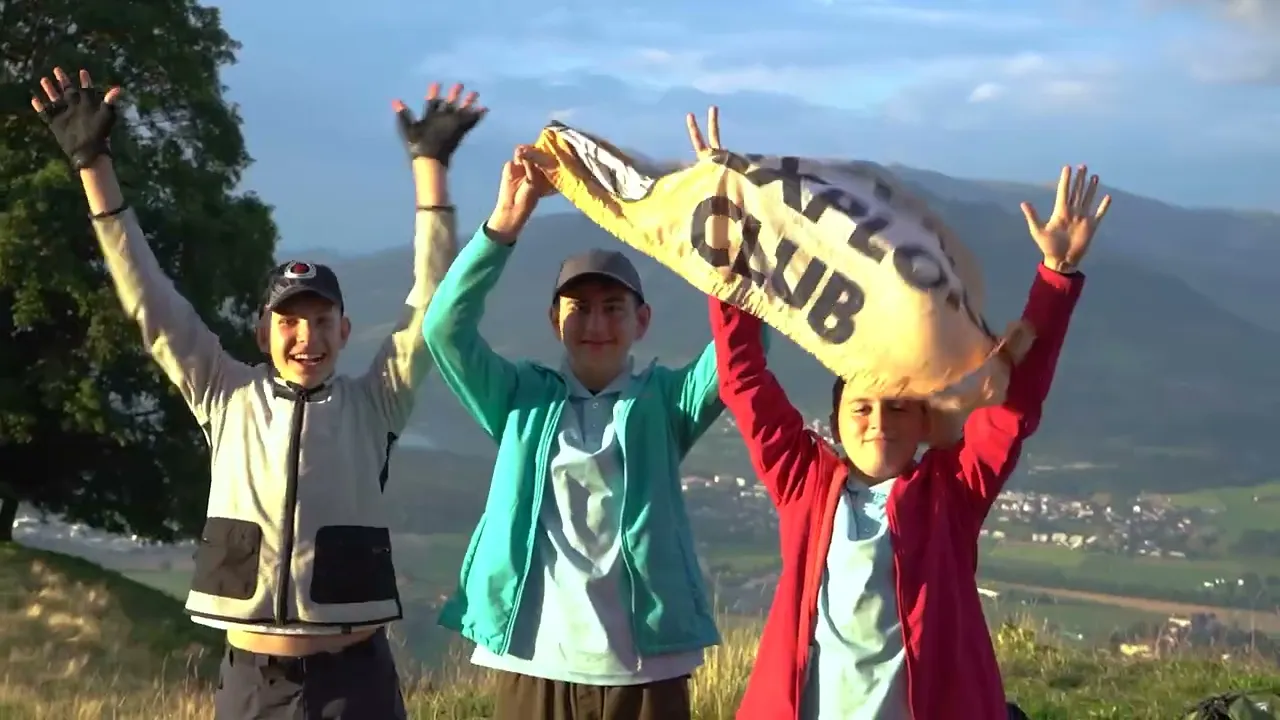 Watch on YouTube
Why Switzerland is a Safe, Practical Choice and How Camps Work
Safety, services and timing
We, at the Young Explorers Club, choose Switzerland because it combines low violent crime with reliable public services. It consistently ranks among the world’s more peaceful and stable countries (Global Peace Index). Healthcare and transport work well, so emergencies and travel disruptions are rare. Petty theft is the main concern for visitors, mostly in busy transport hubs. I advise families to secure bags and valuables on trains and at stations.
Summer travel demand peaks in July, so book early: peak months June–August. Camps fill fast in June–August, especially for language immersion and adventure programmes. Request written confirmations for visas and transfers as soon as you register. For a quick safety overview, we link to a local explanation of safe summer choices: safe summer camps.
Swiss summer camp types and how they operate
Below are the common camp formats you’ll find, each in one line for clarity:
- Day camp — Daytime programme with same-day return, ideal for local stays and families.
- Residential camp — Full-board boarding camps offering immersive, 24/7 programmes and increased independence.
- Language immersion — Structured language classes (German/French/Italian/English) combined with activities to build fluency.
- Adventure camp — Outdoor-focused camps offering hiking, climbing and mountain skills with supervised guides.
- Sports — Specialist camps for football, tennis, swimming and team sports with coaching.
- STEM — Science, robotics and tech camps with hands-on projects and labs.
- Arts — Music, drama, visual arts and performance-focused programmes.
Day vs Residential — quick comparison
- Day camps cost less (CHF 150–400 per week). They run during daytime only, so children return each evening. Families nearby get flexibility and lower fees, but kids miss overnight bonding and full immersion.
- Residential camps run higher (CHF 800–3,500 per week). They include accommodation, meals and round-the-clock supervision. These suit longer stays and deeper cultural or language exposure.
How camps usually work
Camps commonly bundle tuition, accommodation, meals and most day activities. Expect extra-fee items for special excursions, equipment hire or advanced lessons. Ask for an itemized fee sheet before you pay. Early-bird and sibling discounts often range from 10–20%. Always request a camp confirmation letter for visa paperwork and book transfers early for peak travel dates. For planning a summer camp Switzerland stay, confirm dates and medical requirements well ahead of time.

Visa, Entry Requirements and a Practical Timeline for African Families
Key visa requirements and essential facts
We, at the Young Explorers Club, handle hundreds of visa queries and guide families through the Schengen rules. Switzerland is in the Schengen Area, so most visitors from Africa need a Schengen short-stay visa unless they hold a visa-exempt passport. Start with passport checks: valid for at least three months beyond planned departure from the Schengen Area and with at least two blank pages.
Commonly required documents include a completed application, passport photos, proof of accommodation, a round-trip flight itinerary, proof of finances, and a travel medical insurance EUR 30,000 policy with minimum coverage of EUR 30,000. Camps provide an essential camp confirmation letter for visa; request that early and keep multiple copies.
Typical processing is quick in many consulates: Schengen visa 15 days processing is the standard timeframe. Expect longer waits in peak season and some consulates may take 30–60 days, so plan ahead. Current standard fees are visa fee EUR 80 adult, EUR 40 child 6–12 and free for children under six; always verify fees at time of application. For families who want more on why safety matters, see our page on safe summer options.
We recommend labeling documents clearly. Use the keywords camp confirmation letter for visa and travel medical insurance EUR 30,000 on the paperwork you submit or present at interview.
Practical timeline and action checklist
Follow this schedule and checklist to reduce stress and last-minute issues. Apply early is the rule: apply visa 2–3 months early for summer bookings.
- 3–4 months before travel: choose your camp and request the camp confirmation letter for visa. Start collecting passport photos, financial statements, and immunization records.
- 2–3 months before travel: submit your Schengen application. Apply for the visa during this window if traveling in high season. Buy flights and arrange travel medical insurance EUR 30,000. Complete camp medical forms and ensure routine vaccinations are up to date.
- 1 month before travel: confirm airport transfers and share arrival details with camp staff. Print and scan all documents and store digital copies securely.
- Arrival day: hand over originals and copies to camp staff, keep emergency contacts handy, and carry a folder with passport, insurance policy, camp confirmation letter for visa, child health form, and flight itinerary.
Practical tips I insist families follow:
- Apply early — consulate appointment backlogs grow fast between April and June and can push processing to 30–60 days.
- Keep both printed and digital copies of the child’s passport, camp confirmation, health form, insurance policy and flight tickets.
- Use the exact keywords the consulate expects on supporting letters and documents: Schengen visa 15 days, visa fee EUR 80 adult, EUR 40 child 6–12, travel medical insurance EUR 30,000, camp confirmation letter for visa, and apply visa 2–3 months early.
- Bring local emergency contacts and written handover notes for camp staff to make arrival seamless.
We make ourselves available for document checks and can review a draft of your visa packet to reduce refusals and delays.

Budgeting, Costs and Travel Logistics: Flights, Transfers and Airports
We, at the young explorers club, give clear cost ranges so families can plan with confidence. Typical program prices fall into two bands: CHF 150–400 day camp per week for day-only options and CHF 800–3,500 residential camp per week for overnight stays. Expect on-campus extras to be pricier because Switzerland has a high cost of living. I also point families to Swiss safety details when they ask about overall value and protections.
Flight durations from main African gateways are predictable and useful for itinerary planning: flight Lagos–Zurich 6–7h, JNB–Zurich 10–11h. Nairobi to Zurich typically runs about 8–9 hours and Cairo about 4–5 hours. Choose Zurich (ZRH), Geneva (GVA) or Basel (BSL/MLH/EAP) based on connections and ground time. Ground transfers into alpine areas can add several hours; many camps run private or shared transfer services to reduce stress on arrival.
What to budget for and sample two-week totals
Below I list the line items to include and provide low/mid/high two-week examples so you can convert to your local currency and request itemized invoices.
- Budget line items to include: tuition, accommodation, meals, special activities, equipment hire, travel medical insurance, visas, flights, airport transfers, extras and personal spending. Always budget for flights, visa fees, insurance as part of the core checklist.
- Typical transfer pricing: factor CHF 50–400 one-way depending on distance and group size; group transfers cut per-family cost.
- Sample two-week residential case totals (rounded):
- Low case: Camp tuition & board CHF 1,600; flights CHF 800; visa/insurance/transfers/extras CHF 200–600 → Estimated total CHF 2,600–3,000.
- Mid case: Camp tuition & board CHF 3,500; flights CHF 1,400; visa/insurance/transfers/extras CHF 600–1,200 → Estimated total CHF 5,500–6,100.
- High case: Camp tuition & board CHF 7,000; flights CHF 2,000; visa/insurance/transfers/extras CHF 1,200–2,000 → Estimated total CHF 10,200–11,000.
Practical tips I recommend: request an itemized fee sheet and ask about early-bird or sibling discounts (often 10–20%). Book flights early and consider flexible tickets if schedules may shift. Use group transfers to reduce the per-family outlay and check whether the camp’s transfer schedule aligns with your arrival airport so you avoid long waits.

On-site Safety, Staff Qualifications and Health Protections
On-site safety and staff vetting
We, at the young explorers club, expect camps to run supervised activities with qualified guides and lifeguards for any water-based program. Staff should hold lifeguard certification and CPR/First Aid credentials, and every session should have a clear, written emergency evacuation plan. Switzerland’s low violent crime and Global Peace Index top 20 ranking support a safe environment, though petty theft can occur in tourist areas, so lockers and staff supervision at transit points matter.
I insist that camps perform police clearance/background checks for all staff and maintain a written child safeguarding policy. There should be a designated child protection officer whose name and contact details are available on request. Ratios matter for safety and timely emergency response; expect a staff-to-child ratio of 1:6 (young children) and 1:8–1:10 (older children). Those ratios reduce risk during hikes, pool time, and off-site trips.
Ask camps to provide:
- Copies or descriptions of vetting procedures and a list of staff certifications.
- Proof of lifeguard and First Aid/CPR certifications for on-duty personnel.
- The name and contact of the designated safeguarding officer, plus who covers if they’re absent.
- Confirmed emergency evacuation plans and the location of the nearest hospital or clinic.
You can read specifics about our on-site medical arrangements and response protocols on our medical care page, and we’ll share local hospital details before arrival.
Medical checklist for parents
Provide the following items so staff can act fast and keep your child safe:
- Up-to-date immunization record (MMR, DTaP, polio).
- Travel medical insurance EUR 30,000 policy copy.
- Completed camp health form and medication authorization.
- Supply of prescription meds in original packaging and a doctor’s letter for controlled substances.
- Rescue meds if required: EpiPen, inhaler with spacer, plus clear written instructions.
I recommend you label medicines and pack a small daily pill organizer if multiple doses are needed. Notify us of allergies, past hospitalizations, and behavioral or mental health supports your child uses.
Practical requests to make of camps before you book:
- Request the physical address and route to the nearest emergency facility and the camp’s plan to reach it by road.
- Ask for copies of staff vetting logs and a roster showing who holds First Aid, CPR, and lifeguard certifications.
- Confirm the on-site medical presence: whether there’s a nurse, trained medic, or a standing agreement with a nearby clinic.
- Verify the camp’s vaccination policy and current COVID rules for the season.
I’ll be direct: insist on the safeguarding officer’s name and how you can reach them in an emergency. Clear documentation and transparent answers are signs of a camp that values safety as highly as fun.
Accommodation, Food and Cultural Inclusion for African Families
We, at the young explorers club, arrange and review accommodation options so families can choose with confidence. Camps commonly offer dormitory, chalets, homestay, tents and glamping. Ask for photos, floor plans and roommate policies.
Single-sex dorms, family homestays with host matches, or private chalet rooms are all possible. Insist on written details about supervision ratios and evening staff coverage.
Meals are central to comfort and safety. Camps typically provide three meals a day plus snacks, and many can manage halal, vegetarian and nut-free menus. Request sample weekly menus and the camp’s allergy and cross-contamination protocols in writing. Confirm whether meat is halal-certified or halal-prepared, and ask how they separate preparation lines and storage to avoid contamination. Ask for the named kitchen manager who will handle special requests.
Inevitably, cultural inclusion goes beyond food. Request a named cultural liaison or point person for minority families and ask for explicit policies on prayer space and scheduled time for religious practice. Share a pre-camp orientation note that lists dietary restrictions, spiritual needs and relevant cultural practices. Include specific guidance about hair and skin care when you send that note so staff can prepare appropriate products or laundry arrangements.
Keep practical needs on your checklist. Ask about onsite laundry, bedding types and the laundry schedule for hair-care items. Verify staff experience with natural hair products and whether they’ll follow provided routines. Remember that Switzerland’s foreign resident population ~25%; diversity is common but local practices and staff experience vary by canton and camp.
I will highlight one resource families often find useful: read our page on safe summer options to compare camp approaches and parent feedback.
Checklist to confirm with camps
Below is the short list I recommend you request in writing before enrollment:
- Halal meals, prayer space, anti-discrimination policy — ask for a named staff contact.
- Sample weekly menus and written allergy/cross-contamination protocols.
- Confirmation whether meat is halal-certified or halal-prepared and how they prevent mixing.
- Written emergency allergy procedures and who is trained to respond.
- Bedding types, room photos and any laundry schedules for hair-care items.
- Name of the cultural liaison and description of available prayer or quiet space.

Programs, Activities, Packing Essentials and How to Choose: Checklist & FAQs
We, at the young explorers club, run multilingual, safety-first summer programs that blend outdoor skills with classroom learning. Our programs cover outdoor/adventure, watersports, language immersion, sports, arts and STEM, each with age-appropriate safety measures.
Many Swiss camps emphasise outdoor education — including hiking, climbing and mountain safety — and provide certified guides. Activities like climbing, via ferrata and whitewater often carry extra fees and require parental waivers and fitness prerequisites. We insist on clear medical information and travel insurance; see our medical care policies before you apply. Note climate and altitude: lowland summers usually sit at lowland temps 18–28°C, while higher sites can be mountain temps 5–20°C with sudden shifts. Camps often operate between 1,000–2,000 m; risk of altitude sickness rises significantly above 2,500 m, so tell camps about respiratory or cardiac issues and plan gradual acclimatisation.
Sample schedules, packing essentials and decision checklist
Below are practical examples, packing must-haves and concrete checklist items to request from camps.
- Outdoor/adventure — Morning: mountain-safety briefing and guided hike; Afternoon: skills session (navigation, ropes); Evening: campfire. (Keyword: “outdoor education hiking climbing mountain safety”)
- Watersports — Morning: swim lessons with lifeguard; Afternoon: supervised kayaking; Evening: safety debrief. (Keyword: “watersports supervised lifeguard”)
- Language immersion — Morning: language classes; Afternoon: activity workshops; Evening: conversation groups. (Keyword: “language immersion German French Italian English”)
- Sports — Two coached sessions per day with match play and fitness training.
- Arts/music — Morning workshops, afternoon rehearsals, evening performances.
- STEM/robotics — Project-based labs with afternoon competitions.
Packing essentials (African families should prioritise these):
- Layered clothing and waterproof jacket; sun hat and sunscreen SPF 30–50.
- Comfortable walking shoes; lightweight trainers for sport; small daypack.
- Prescription meds in original packaging, copies of prescriptions, EpiPen/inhaler if needed.
- Travel adaptor, copies of documents, hair-care products for natural hair.
- Printed medical forms and any cultural dietary notes (halal/pork-free needs).
Decision checklist items to compare camps (print and request these):
- Safety policies, emergency plans and published staff vetting/background checks.
- Staff-to-child ratios and evidence: “staff-to-child ratio 1:6 / 1:8–10“.
- Language of instruction and immersion details; sample daily schedule.
- On-site or nearby medical services, required health forms and arrival procedures.
- Dietary accommodations and sample menus; itemised cost breakdown and refund policy.
- References (ask for at least two from international or African families) and inspection/accreditation reports.
- Visa, packing and medical authorisation templates available for download on request.
FAQs
Q: How long does a Schengen visa take?
A: Schengen visa 15 days is standard; allow 30–60 days in busy periods.
Q: What is the typical staff-to-child ratio?
A: Expect staff-to-child ratio 1:6 for young children and 1:8–1:10 for older kids.
Q: Is travel insurance required for visa?
A: Yes — minimum coverage insurance EUR 30,000 is needed for Schengen visa.
Case snapshots
Examples from families:
- Lagos parent: a two-week language stay where their 13‑year‑old improved English fluency and cultural fit while halal and prayer needs were met.
- Nairobi family: praised strong mountain-safety instruction and extra hair-care support for a 10‑year‑old.
- Johannesburg parent: of a 15‑year‑old highlighted clear itemised fees and a helpful visa confirmation letter for a STEM camp.
https://youtu.be/Hg6e28rzzfA


