

Why outdoor learning environments are key for summer camp growth
Discover how outdoor learning environments at summer camps build resilience, bilingual skills, and lasting confidence in children aged 8 to 17.
TL;DR:
- Outdoor learning develops critical thinking, resilience, and social-emotional skills through experiential challenges.
- Adventure and risk-taking in outdoor camps enhance confidence, emotional regulation, and physical health.
- Bilingual growth is naturally fostered through real-world communication and shared activities in immersive outdoor environments.
Children who spend summers outdoors don’t just come back tanned and tired. They come back fundamentally changed. Research consistently shows that outdoor learning environments develop skills, confidence, and resilience that traditional indoor settings simply cannot replicate. For parents weighing summer camp options, understanding what actually happens when kids climb mountains, navigate trails, or practice a new language around a campfire can make all the difference. This article breaks down the evidence behind outdoor education, adventure-based risk, physical and mental health gains, and bilingual development so you can make a confident, informed choice for your child.
Table of Contents
- The unique benefits of outdoor learning environments
- How adventure and risk build resilience and confidence
- Physical and mental health gains from nature-based programs
- Immersive environments and bilingual language learning
- Our perspective: What most guides forget about outdoor learning
- Discover camps designed for real growth
- Frequently asked questions
Key Takeaways
| Point | Details |
|---|---|
| Deeper learning outdoors | Experiential, nature-based settings foster critical thinking and problem-solving in ways indoor environments rarely match. |
| Adventure builds character | Managed risk and challenge in outdoor programs are key to developing confidence, resilience, and leadership. |
| Healthier, happier kids | Nature camps increase physical activity, boost mental health, and reduce screen time for lasting well-being. |
| Real-world bilingual skills | Language learning thrives in social, immersive settings where kids use new languages naturally with peers. |
The unique benefits of outdoor learning environments
Indoor classrooms have their place, but they come with an invisible ceiling. When children step outside, the learning dynamic shifts completely. Natural settings demand engagement. There is no passive sitting. Kids must observe, adapt, and respond to a world that doesn’t follow a textbook.
Outdoor learning environments enhance critical thinking, problem-solving, and decision-making skills through experiential learning in natural settings. This isn’t soft science. Children who learn by doing, by touching, failing, and trying again, build cognitive habits that stick. A child who figures out how to set up a shelter in the rain is practicing logic, spatial reasoning, and perseverance all at once.
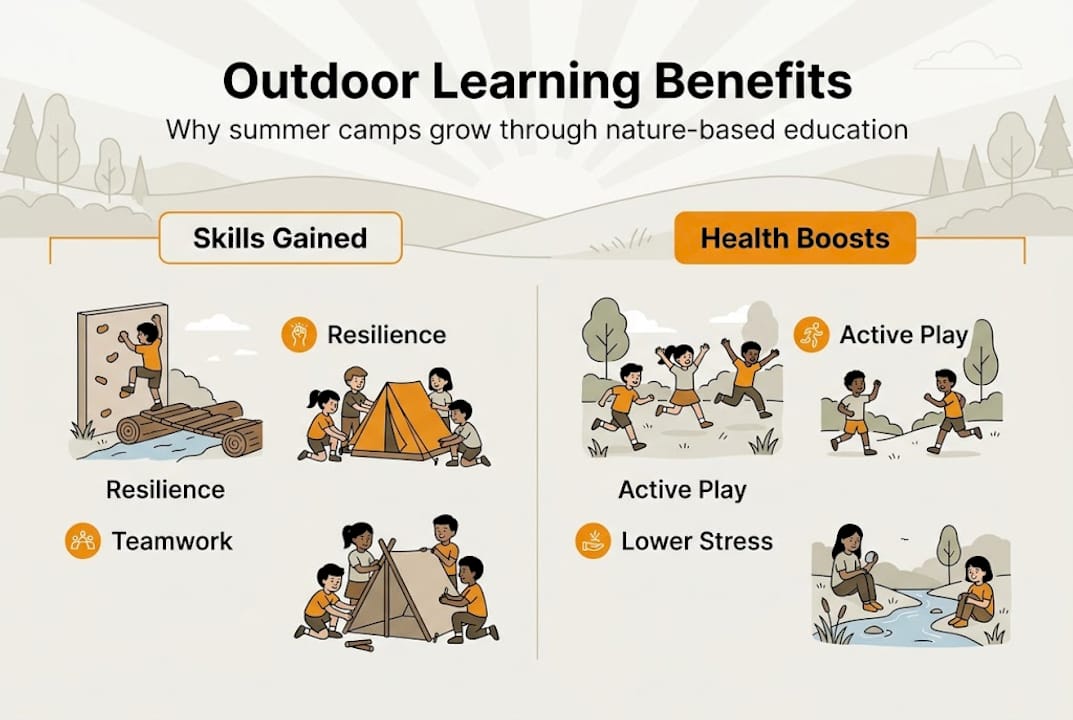
Physical activity is another major factor. Outdoor environments outperform indoor settings for physical activity, reducing sedentary behavior and screen time significantly. At a time when many kids are glued to devices, outdoor camps offer a genuine counterweight.
Here is a quick look at how outdoor learning stacks up across key development areas:
| Development area | Indoor camp | Outdoor camp |
|---|---|---|
| Physical activity | Low to moderate | High |
| Problem-solving | Structured exercises | Real-world challenges |
| Social connection | Group tasks | Shared adventures |
| Screen time | Often high | Minimal |
| Risk management skills | Limited | Actively developed |
Beyond the numbers, outdoor camps that encourage new experiences expose kids to situations that genuinely stretch their comfort zones. That stretch is where growth happens.
Key skills developed in quality outdoor learning environments include:
- Self-reliance: Managing personal gear, decisions, and emotions independently
- Environmental awareness: Learning to read weather, terrain, and nature
- Collaboration: Working toward shared goals in unpredictable settings
- Adaptability: Responding to plans that change due to weather or challenge
- Communication: Expressing needs and ideas clearly under pressure
“Nature isn’t just a backdrop for learning. It’s an active co-teacher that introduces complexity, beauty, and challenge in ways no indoor environment can design.”
The kids who build lifelong skills from outdoor camps don’t just become better campers. They become more capable, self-aware people.
How adventure and risk build resilience and confidence
Having established the unique advantages of outdoor settings, let’s explore how structured adventure and taking risks further fuel child development.
Most parents instinctively want to protect their children from risk. That instinct is natural and good. But there is a meaningful difference between dangerous risk and developmental risk, and the best outdoor camps understand exactly where that line is.
Risky outdoor play and adventure education build resilience, confidence, wellbeing, physical skills, autonomy, and nature connectedness in children and adolescents, based on 40 empirical studies. Forty studies. That’s not a trend. That’s a pattern.
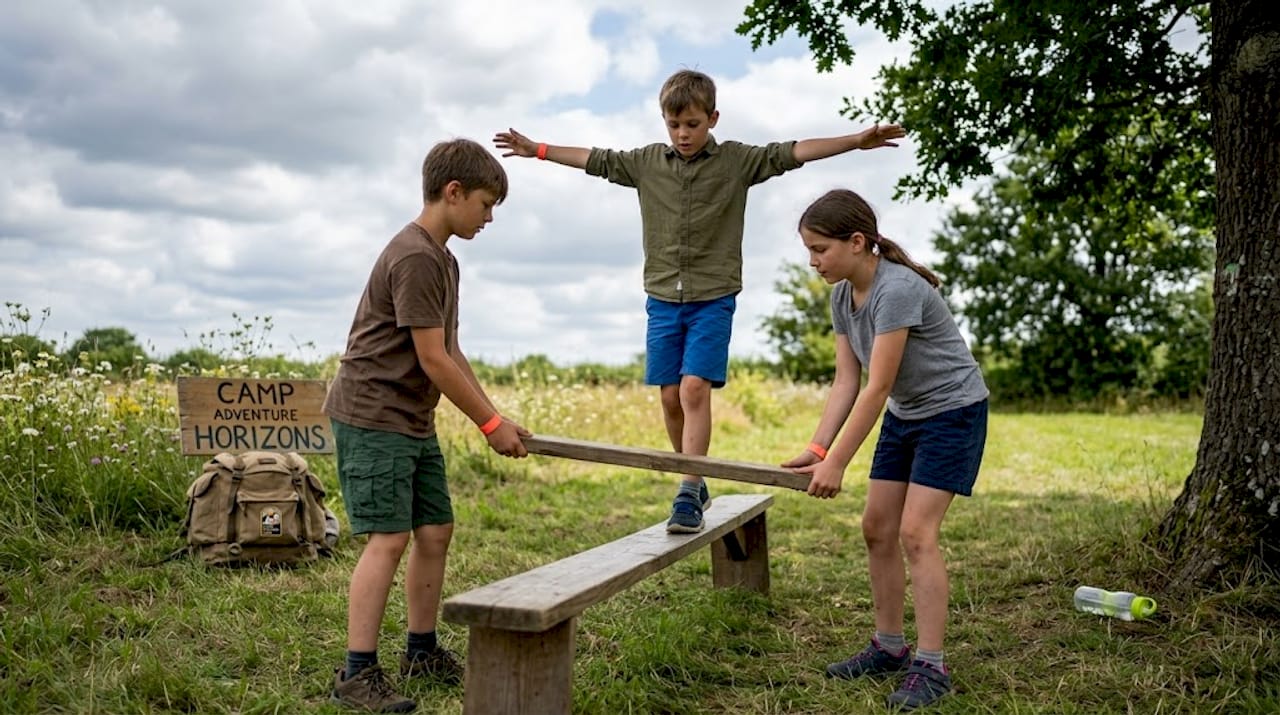
When a child completes a rock climb they thought was impossible, something shifts inside them. They don’t just feel proud. They update their internal model of what they can do. That updated self-concept carries into school, friendships, and every future challenge they face.
Outdoor Adventure Education fosters social-emotional learning (SEL) competencies including emotional regulation, collaboration, leadership, and resilience through experiential methods. These aren’t abstract outcomes. They are observable, measurable, and they transfer.
Here’s how outdoor adventure compares to conventional summer programs:
| Competency | Conventional program | Adventure-based program |
|---|---|---|
| Emotional regulation | Taught in sessions | Practiced under real stress |
| Leadership | Role-play exercises | Leading a team on a trail |
| Resilience | Discussed | Built through challenge |
| Confidence | Encouraged verbally | Earned through achievement |
Parents can support this process by reframing how they talk about camp before their child leaves:
- Emphasize effort over outcome: “I’m proud of you for trying,” not just “I hope you win.”
- Normalize discomfort: Tell your child that feeling nervous is a sign something worthwhile is happening.
- Avoid over-rescuing: Let camp staff handle setbacks. It’s part of the process.
- Celebrate small wins: Ask about specific moments, not general impressions.
- Trust the professionals: Certified instructors know how to calibrate challenge to the child.
Pro Tip: Before camp starts, ask your child to name one thing they’re nervous about and one thing they’re excited about. This simple conversation builds emotional vocabulary and sets a healthy mindset for managed risk.
If you want to understand more about building confidence at summer camps, the evidence is clear. And the benefits of adventure learning in mountain environments specifically add another layer of cognitive and emotional stimulation that flat, urban settings simply can’t match.
Physical and mental health gains from nature-based programs
Building on developmental benefits, it’s also important to consider the health impacts of outdoor learning.
The numbers here are striking. Summer day camps increase moderate-to-vigorous physical activity by 15 minutes per day, reduce sedentary time by nearly 30 minutes per day, and cut screen time by over 14 minutes per day. Those might sound like small shifts, but compounded over a two-week or month-long camp, they represent a genuinely different lifestyle rhythm.
Physical health gains from outdoor nature camps include:
- Improved cardiovascular fitness through hiking, swimming, and sports
- Better sleep from fresh air and physical exertion
- Stronger motor skills through climbing, cycling, and coordination activities
- Reduced anxiety from natural environments and movement
- Increased vitamin D exposure from time outdoors
| Health outcome | Indoor summer program | Nature-based outdoor camp |
|---|---|---|
| Daily physical activity | Moderate | High (+15 min/day) |
| Sedentary time | High | Reduced (approx. 30 min less/day) |
| Screen time | Often unrestricted | Minimal |
| Mental wellbeing | Varies | Consistently improved |
Structured nature experiences in summer camps support mental, emotional, and social health competencies. This includes self-esteem, emotional regulation, and the kind of peer bonding that’s hard to replicate in a gym or classroom.
The wellness benefits of nature camps also extend into reduced anxiety. Natural settings lower cortisol levels, that’s the body’s primary stress hormone. Kids who feel calmer are also more open to learning and connection.
Strong healthy relationships at camp form partly because the shared challenges of outdoor programs build genuine trust. When you’ve hiked a steep trail together or navigated a river crossing as a team, you form bonds that a week of indoor group activities rarely produces.
For parents wondering how camps help kids grow in a holistic sense, the physical and mental health angle is often the most immediate and visible change you’ll notice when your child returns home.
Immersive environments and bilingual language learning
While health benefits are well documented, many parents also seek bilingual growth. Let’s examine how outdoor camps enable this.
Outdoor adventure doesn’t immediately seem like a language classroom. But that’s exactly what makes it so effective. When children are genuinely engaged in an activity, their guard drops. They stop translating in their heads and start communicating in the moment.
Though immersive adventure settings and bilingual outcomes haven’t been studied directly in outdoor-specific research, the contextual, relational nature of camp life makes a compelling case for natural language acquisition. Real conversations happen around fires, on trails, and during shared problem-solving. Not in worksheets.
Group adventures multiply language opportunities in ways that a formal class cannot. A child asking a French-speaking teammate which rope to grab, or explaining a route in English, is practicing syntax, vocabulary, and cultural understanding all at once. The stakes are real, and that’s what makes it stick.
Practical tips for maximizing bilingual development at camp:
- Choose camps with a genuine bilingual staff structure, not just optional language classes
- Encourage your child to room or buddy with a peer from a different language background
- Ask about activities that require verbal communication between campers of different languages
- Review a few key phrases together before camp to reduce initial anxiety
- Celebrate language mistakes at home. Risk-taking in language is the same as risk-taking on a trail.
Pro Tip: Ask the camp coordinator how language mixing is structured into daily activities, not just scheduled class time. The most effective bilingual growth happens outside formal instruction.
Camps that use language immersion through activities and hands-on learning give children a reason to communicate, which is the most powerful driver of real language growth.
“Language acquisition doesn’t require a grammar lesson. It requires a reason to speak. Outdoor adventure gives children exactly that.”
Our perspective: What most guides forget about outdoor learning
Most guides will list the benefits of outdoor camps. Fewer will tell you what those benefits actually cost in terms of parental comfort. Because here’s the truth: you will worry. Your child will get a scrape, feel homesick, and probably fail at something during their first week. That is not a failure of the program. That is the program working.
The research on confidence through international camps is clear, but numbers don’t capture the moment a child realizes they are capable of more than they thought. That moment only comes through challenge, not comfort.
What most guides also miss is the integration piece. Adventure, language, physical health, and emotional growth don’t happen in separate buckets at outdoor camps. They happen simultaneously, in the same moment, on the same trail. A child who navigates a French conversation while helping a teammate cross a river is building cognitive flexibility, language, leadership, and trust all at once. No indoor environment can design that. Outdoor camps aren’t a luxury. They’re one of the most strategically sound investments you can make in a young person’s development.
Discover camps designed for real growth
Ready to give your child the growth and joy of the outdoors? At Young Explorers Club, our programs are built around exactly what the research supports: adventure that stretches children safely, bilingual environments that make language learning natural, and nature-based experiences that build genuine confidence.
Our teen summer camp programs combine mountain activities, team challenges, and real-world communication in one of the world’s most inspiring outdoor settings. If bilingual growth is a priority, our immersive language camps weave French and English into every activity, not just the classroom. Explore everything we offer at Young Explorers Club and connect with a camp advisor who can help find the right fit for your child’s age, interests, and goals.
Frequently asked questions
What specific skills do kids gain from outdoor learning environments?
Outdoor learning environments enhance critical thinking and decision-making through hands-on experience, while also building resilience, physical fitness, and social-emotional competencies that indoor settings rarely develop.
How does outdoor camp help with my child’s mental health?
Structured nature experiences support self-esteem, emotional regulation, and social bonding, while natural settings also lower stress hormones and give kids healthy ways to process emotions.
Are outdoor camps safe for riskier adventure activities?
Yes. Reputable outdoor camps use trained staff and established protocols to manage challenge carefully, and expert-managed adventure turns risk into a controlled developmental tool, not a hazard.
Can summer camps help with bilingual language learning?
While direct research on outdoor-specific bilingual outcomes is still emerging, immersive adventure settings naturally encourage peer-to-peer language use through shared activity, making language practice feel purposeful and real.


